
Is it worth including?
Central corridor · easy old-town walk It fits naturally into a visit to this part of the destination.
- Allow
- Allow about 30–60 minutes for the exterior, bazaar context and a respectful interior visit if available.
- Getting there
- The mosque is in Travnik’s central lower bazaar area and is best reached on foot as part of the old-town corridor.
- Ground / accessibility
- The commercial base, mosque entrance and worship level can involve steps or thresholds. Confirm current step-free access with the local religious community if needed.
Understanding Šarena Džamija
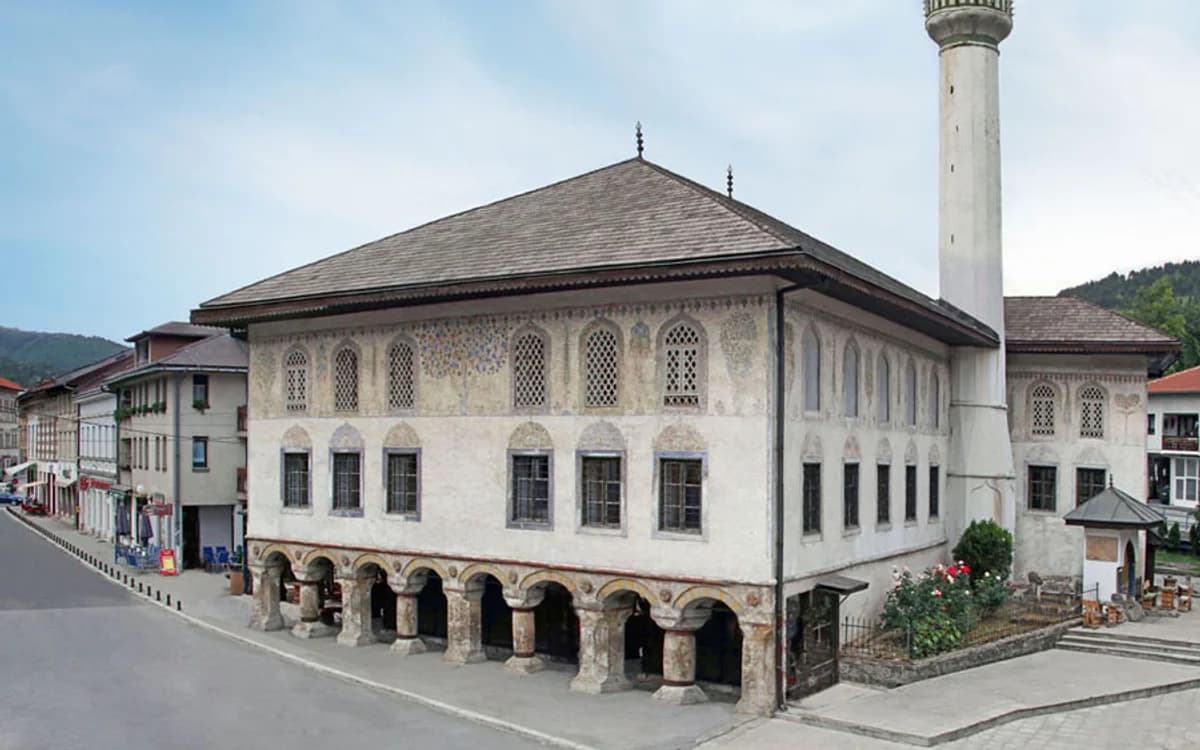
Sulejmanija, usually called Šarena Džamija or the Painted Mosque, reflects several rebuilding phases in Travnik’s Ottoman urban history. Travnik.ba traces an earlier mosque on the site to Gazi-aga in the late sixteenth century. In 1757 Bosnian governor Ćamil Ahmed Pasha rebuilt it substantially and integrated commercial space beneath it, tying worship directly to the bazaar economy of the lower town.
A major fire in 1815 led to another reconstruction under Sulejman Pasha Skopljak, whose name survives in Sulejmanija. The building is especially known for painted ornamental decoration, the commercial bezistan below and an unusual minaret position on the left side. Restoration in the late 2010s renewed both the mosque and its decorated surfaces, but it remains an active place of daily Muslim worship rather than a preserved museum interior.
What to see, and what deserves a closer look
Look at the building from the surrounding bazaar first. The raised prayer space and commercial level below make more sense from outside, where you can see how the mosque belongs to the market street rather than standing in an isolated religious compound.
If respectful visitor access is possible, the painted interior is the main visual reward. Slow down for the ceiling, ornamental fields and woodwork instead of treating “colorful mosque” as a single photo label.
Look for these details
- The richly painted interior surfaces that give the mosque its popular name.
- The unusual integration of the prayer hall with commercial/bezistan space below.
- The building’s layered history of eighteenth- and nineteenth-century reconstruction within Travnik’s bazaar.
How to plan the visit
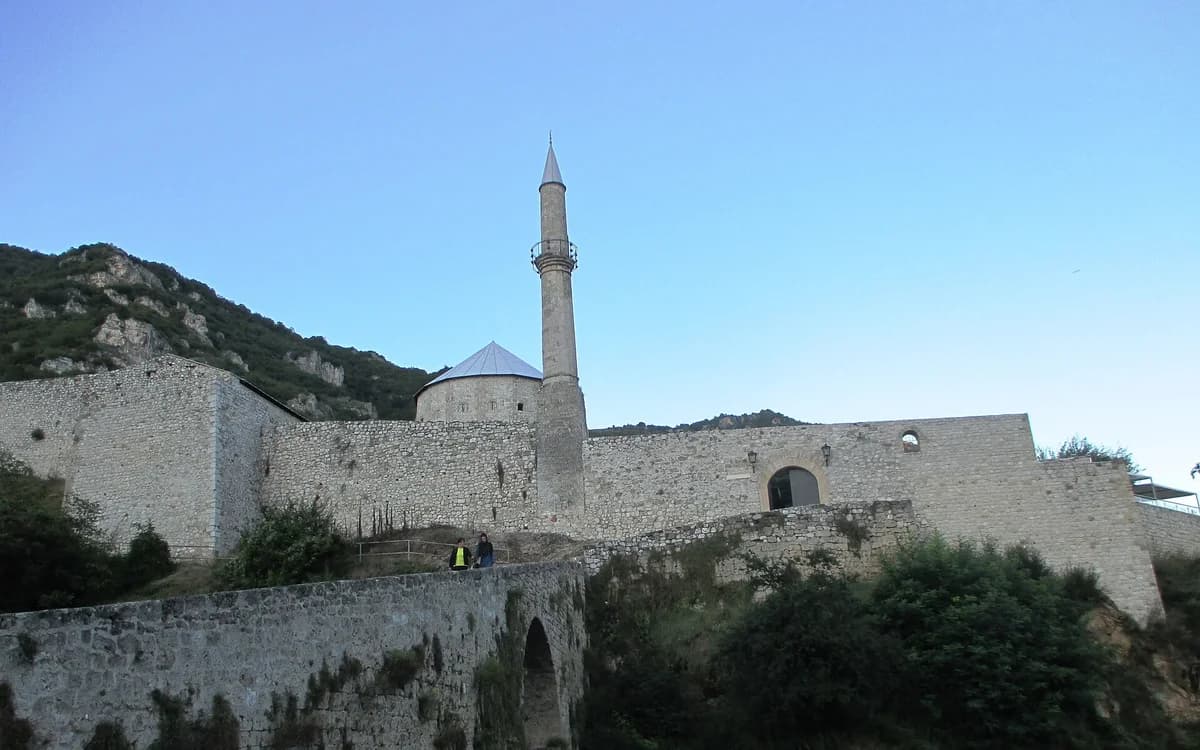
Include Šarena Džamija in a central Travnik walk between the everyday town center and the fortress/Plava Voda end. It needs no separate vehicle transfer, making it particularly useful as a cultural stop while walking through the lower bazaar and its historic commercial streets.
Interior access depends on active religious use. Do not reproduce an old sightseeing timetable; visit outside prayer when possible and be prepared for an exterior-only stop. The ornamented exterior and building's unusual market-level arrangement remain worth looking at even when worship takes priority indoors.
Timing & conditions
Choose a period outside congregational prayer for sightseeing. The exterior and urban context remain visible even when the interior is reserved for worship.
Respectful visiting
Dress modestly, remove shoes where required, keep voices low and never photograph worshippers without permission. Respect any separate visitor areas.
Avoid these common mistakes
- Treating the mosque as an always-open decorative attraction rather than an active religious building.
- Photographing only the painted façade/interior without noticing how the building is structurally integrated with the commercial street.
Questions before you go
Why is it called Šarena Džamija?
The popular name means Painted or Colorful Mosque and refers to the extensive ornamental decoration associated with the building, while its formal historical name Sulejmanija recalls Sulejman Pasha Skopljak’s reconstruction.
Can tourists enter Šarena Džamija?
It is an active mosque, so any interior visit must follow current local guidance and prayer use. The exterior and bazaar context can always be appreciated without disrupting worship.
Nearby sights and a wider itinerary
Interior access depends on active religious use. Do not reproduce an old sightseeing timetable; visit outside prayer when possible and be prepared for an exterior-only stop. The ornamented exterior and building's unusual market-level arrangement remain worth looking at even when worship takes priority indoors.

Sources and further reading
History and visitor context are informed by these references. Geographic point provenance and licensed photo attribution are shown separately above; a Google Maps pin is not a historical source.