
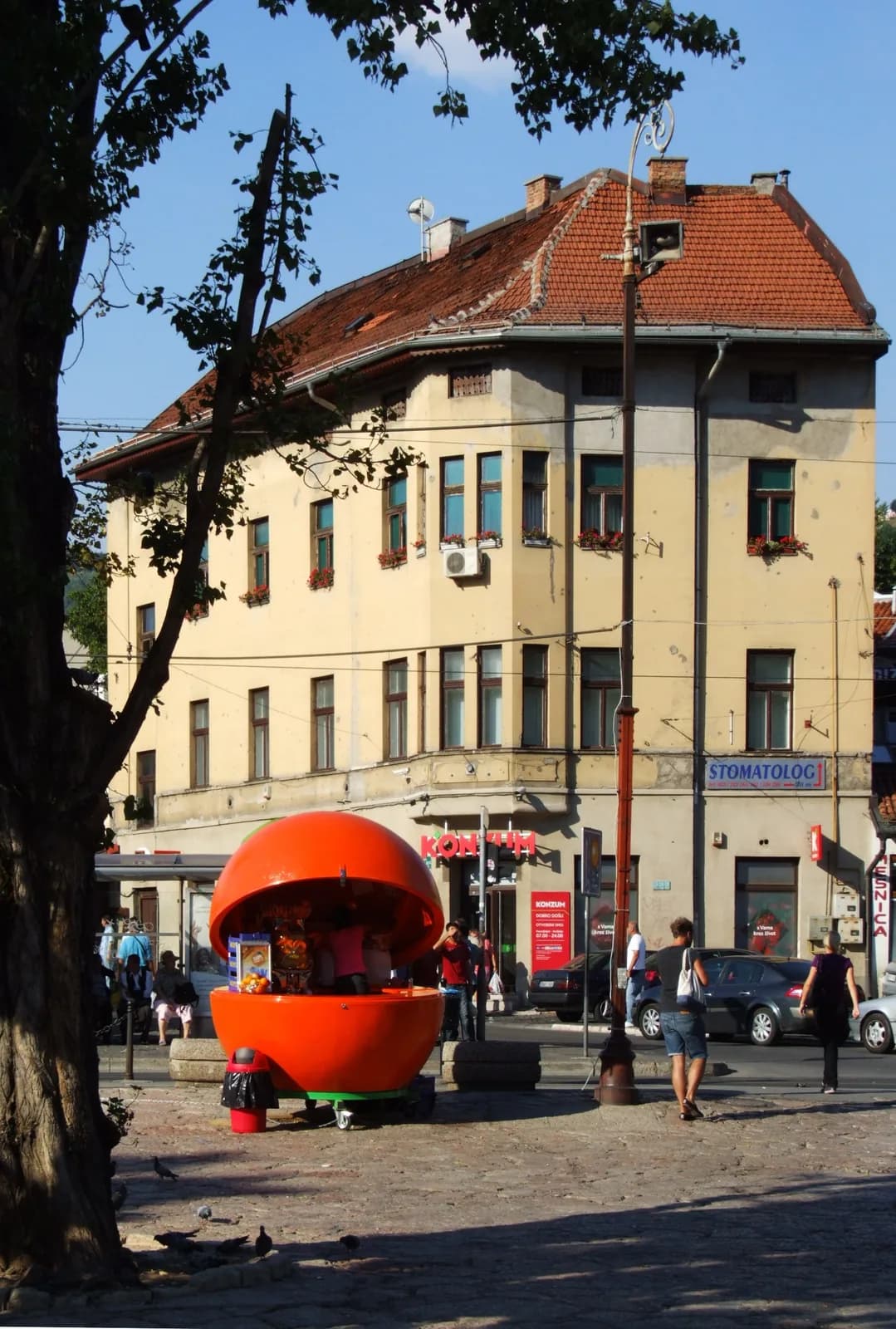
The practical answer
Bosnia can work well without a car when the trip is built around Sarajevo, Mostar and selected coach-linked towns. The strongest car-free pattern is to stay centrally, use the Sarajevo–Mostar rail/coach corridor for the major city leg, and treat mountain resorts, national-park zones and scattered countryside attractions as separate transfer decisions rather than ordinary city transit.
- Central Sarajevo and Mostar are the easiest no-car bases in the current verified inventory.
- Jajce and Travnik can fit a coach-based route when you keep the overnight central.
- Jahorina, Una National Park and dispersed countryside days need more deliberate transfer planning.
Make a two-base trip work before adding another stop
Use this checklist to turn the route into bookable legs. The local Mostar Bus network is distinct from intercity coaches.
| Leg | What to confirm | Accommodation consequence |
|---|---|---|
| Airport → Sarajevo | Compare your arrival with the airport timetable PDF and your check-in cutoff | Choose an address with a manageable final approach; arrange a fallback for a missed bus |
| Sarajevo → Mostar | Check ŽFBH service notices and the actual Mostar stop times; compare an intercity coach if needed | Compare station access with the Old Town entrance before choosing the room |
| Mostar → regional sights | Check whether the specific excursion has return transport or needs an arranged transfer | A central room alone does not solve the countryside day |
| Return / departure | Confirm the last overnight and departure transfer independently | Keep the final night near the departure city when the connection would be tight |
If the plan changes: If an onward leg cannot be confirmed, keep the current base and choose a city day or an excursion with a confirmed return. Do not rely on a map distance as proof of a bus connection.
Design the trip around corridors that already work
Bosnia is workable without a car, but only if the route respects the difference between city-to-city transport and dispersed mountain or nature areas.
| Strongest no-car corridor | Sarajevo ↔ MostarRail and coach options make this the clearest intercity backbone. |
|---|---|
| Good additions | Jajce or TravnikCentral stays can work by coach when the overnight is worth the schedule. |
| Needs more planning | Jahorina / Una National ParkTreat these as dedicated transfers, tours or road-based legs. |
| Hotel priority | Arrival point + walkabilityA central stay is most useful when it also makes the next departure easy. |
| Main mistake | Copying a driving itineraryA no-car trip needs a different route, not just a different transport icon. |
Open the bases this guide talks about.
These links open the accommodation directory for each base; live room prices and availability remain on the booking provider.
Use Sarajevo and Mostar as the transport spine
Sarajevo has the broadest urban transport network in the current destination set, while Mostar's rail and main bus stations sit together. The passenger railway links the two cities, making this the clearest intercity leg to design around without a car.
Stay location still matters: central, valley-floor Sarajevo behaves differently from a hillside address, and a Mostar Old Town stay trades easier sightseeing for a rougher luggage/vehicle approach.
Add Jajce or Travnik only when the coach leg is worth the overnight
Both Central Bosnia towns can work without a private vehicle once you arrive centrally. Jajce's historic core is compact, while the Pliva Lakes sit outside the immediate centre; Travnik's fortress and Plava Voda work centrally, while Vlašić is a separate road-based decision.
That means the overnight location can remove more friction than trying to force the whole area into a day trip from Sarajevo.
Know where car-free stops being simple
A mountain resort such as Jahorina does not behave like a city neighborhood, and Bihać is not the same thing as Una National Park. In both cases the wider attraction network is spread across separate nodes.
Use a transfer, organized excursion or car for those legs when they are central to the trip rather than relying on generic public-transport assumptions.
Book around arrival points, not just attraction pins
With no car, the best stay is often the property that keeps both the first walk and the next departure simple. Check the station, bus terminal or airport-transfer stop before choosing between two similarly central properties.
This is also why exact map position is more useful than a broad neighborhood label on a car-free route.
A guided day solves the last mile only when it is included
Check the exact meeting point before assuming a day tour solves the entire journey. Hotel pickup, a central meeting point and pickup for an extra fee are different arrangements. Confirm the end of the tour too, especially if you need an onward bus or train that evening.
For Konjic or a combined Jajce–Travnik excursion, choose the actual experience before building the connections. A town visit can work differently from a reserved bunker or outdoor activity. Compare an organized day with the complete independent journey, including entrances and local transfers, and keep the main city route useful even if the optional excursion cannot be confirmed.
Official links
The details that change the decision.
Use the short sections above for orientation; use these deeper notes when you are choosing the actual route, transfer or overnight.
Think in transport chains, not destinations
A place being reachable by bus or train is not the same as a trip working well without a car. The useful question is whether the full chain—from hotel checkout to station, intercity ride, arrival point and the next hotel—fits the day without consuming the experience you travelled for.
That is why Sarajevo and Mostar are so useful: they have defined urban transport systems and central areas that reward walking once you arrive. Smaller towns can also work, but the last departure and the position of the bus station matter more because there are fewer backup options.
| Place | No-car role | What to verify |
|---|---|---|
| Sarajevo | Primary city base | Airport arrival, local transit, station connection |
| Mostar | Primary city base | Rail/coach schedule and Old Town walk from station |
| Jajce | Possible overnight | Coach timing; local solution if Pliva Lakes are included |
| Travnik | Possible overnight | Coach timing; separate plan for Vlašić |
| Jahorina | Dedicated mountain stay/transfer | Current transfer and resort operations |
| Bihać / Una | City + separate nature transport | How you will reach dispersed park zones |
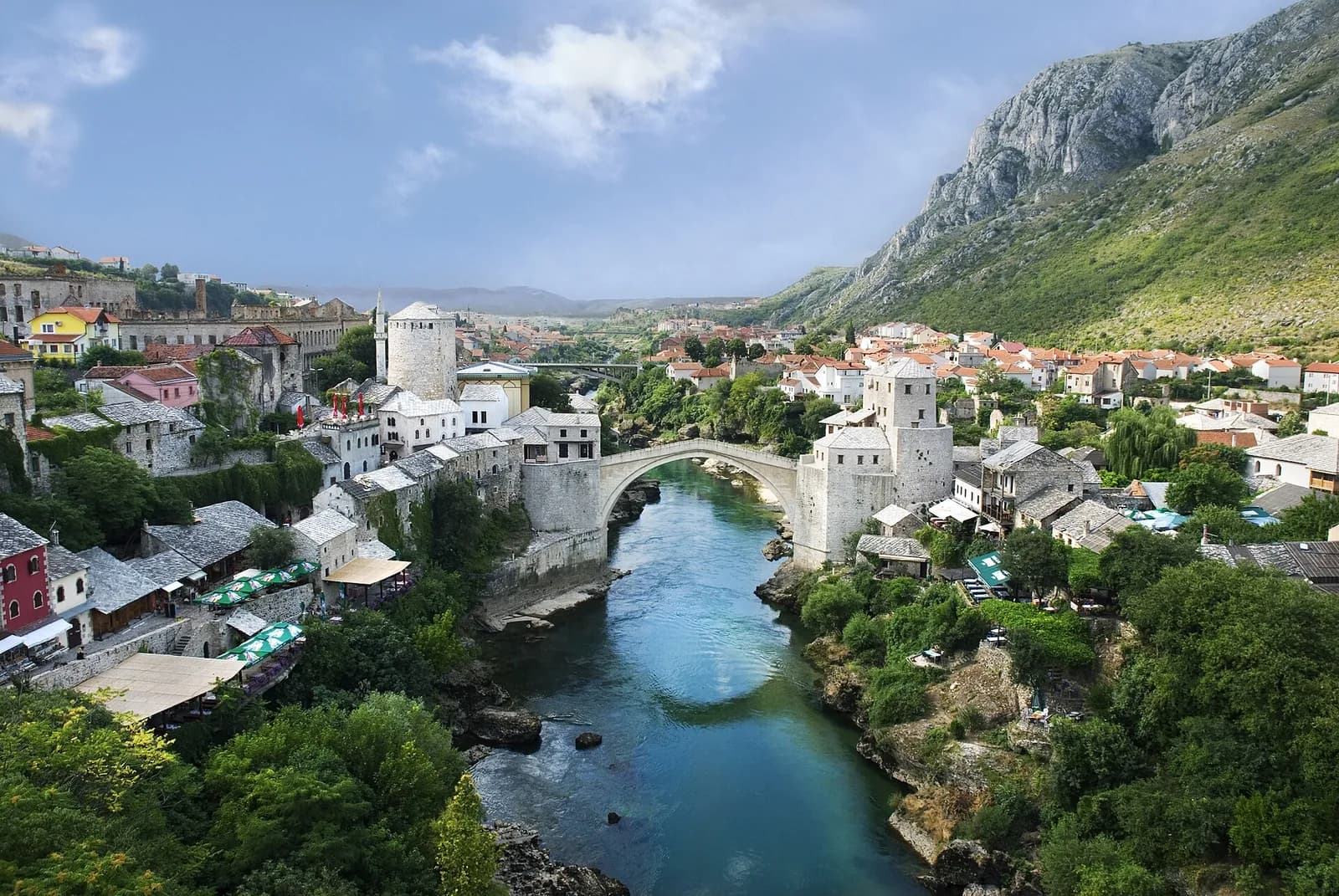
Stay location matters more on a car-free trip
A beautiful property can be a poor no-car choice if it sits on a steep edge of town, far from the station or away from the transport you need the next morning. In Sarajevo, compare valley-floor access with hillside views. In Mostar, decide whether you value the Old Town door-step more than a shorter luggage move from the station.
For smaller towns, centrality is even more valuable because it lets you use the limited intercity network without adding a second local transport problem. That does not mean every trip should choose the closest hotel to the bus station; it means the arrival and departure should be part of the accommodation decision.
- With luggage, a 15-minute flat walk and a 15-minute steep walk are not the same problem.
- If you have an early coach/train, move the location decision toward the departure point.
- If you have two nights, it can be worth accepting a longer station walk for a better evening location.
- Never assume a mountain resort is covered by the same public transport as the nearby city.

Know when to buy convenience instead of forcing public transport
A no-car trip does not need to be a no-taxi, no-transfer or no-tour trip.
A private transfer or organized excursion can be the rational choice when the alternative is a complicated sequence that wastes most of the day. The important distinction is to use paid convenience selectively—on the one leg that unlocks a mountain, national park or dispersed regional day—rather than paying for door-to-door transport everywhere.
This hybrid approach often produces a better trip than trying to prove every attraction is technically reachable by scheduled transport. Keep the main city corridor independent and use a transfer only where it meaningfully expands what you can do.
Build slack into every limited-frequency day
When a route has many departures, a small delay is an inconvenience. When there are only a few useful departures, the same delay can break the day. Give more margin to the legs where missing one service creates a multi-hour wait or forces an expensive fallback.
Check operators again close to travel, especially around seasonal service, holidays and mountain operations. The itinerary should still function if one preferred departure disappears.
Before you commit to a no-car overnight
- Confirm the last useful arrival and the first useful onward departure.
- Check the hotel-to-station walk with luggage, not just the map distance.
- Decide whether the main attraction is central or dispersed outside town.
- Keep a taxi/transfer fallback for the one leg that would otherwise make the itinerary fragile.
- Re-check live operator information shortly before travel.
Short answers before you lock the route.
Can you travel Sarajevo to Mostar without a car?
Yes. Passenger rail and coach options serve the corridor; check the current operator timetable for the travel date rather than relying on a fixed schedule copied into an itinerary.
Can you visit Jajce without a car?
Yes for the central sights and an overnight stay. The Pliva Lakes sit outside the immediate centre, so the wider Jajce day is less frictionless without a taxi, bicycle or other local transport.
Is Jahorina practical without a car?
It can be, but it should be planned as a dedicated transfer or resort stay, not as if it were another Sarajevo tram stop.
Official and primary links
Use these links for live transport, road, weather or resort details referenced in the guide.