
Is it worth including?
Pliva lakes outing · west of the historic core This is a separate outing outside the compact city walking area.
- Allow
- Allow about 45–75 minutes at the mills, or 2–3 hours when combined properly with a lakeside walk or recreation stop.
- Getting there
- The mills sit between the Great and Small Pliva Lakes outside central Jajce. Reach the lake area by road, taxi, bicycle or another locally verified transfer.
- Ground / accessibility
- The attraction includes waterside paths, bridges and potentially wet or uneven surfaces. Check the current easiest viewing route if wheelchair or stroller access is important.
Understanding Pliva watermills / Mlinčići
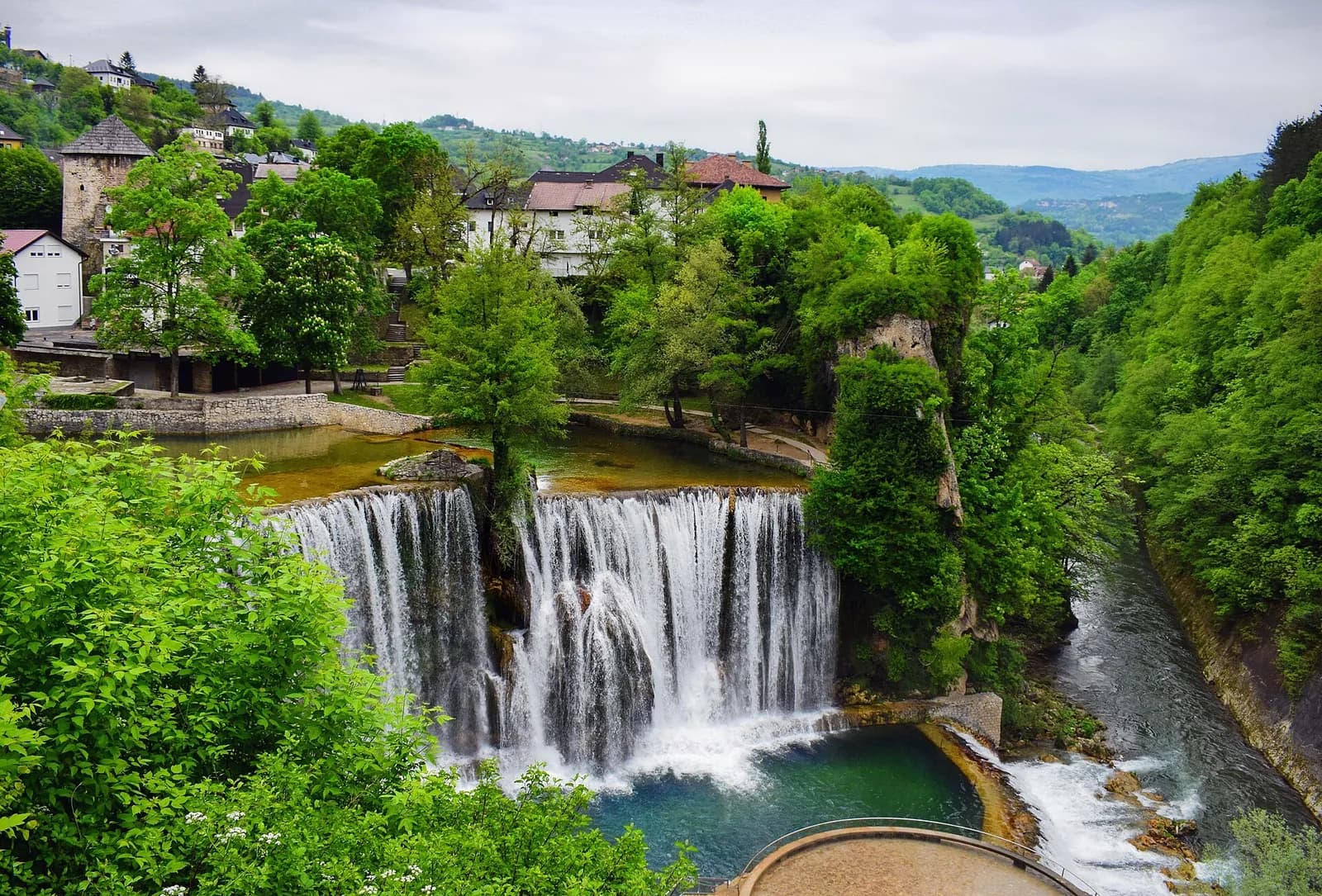
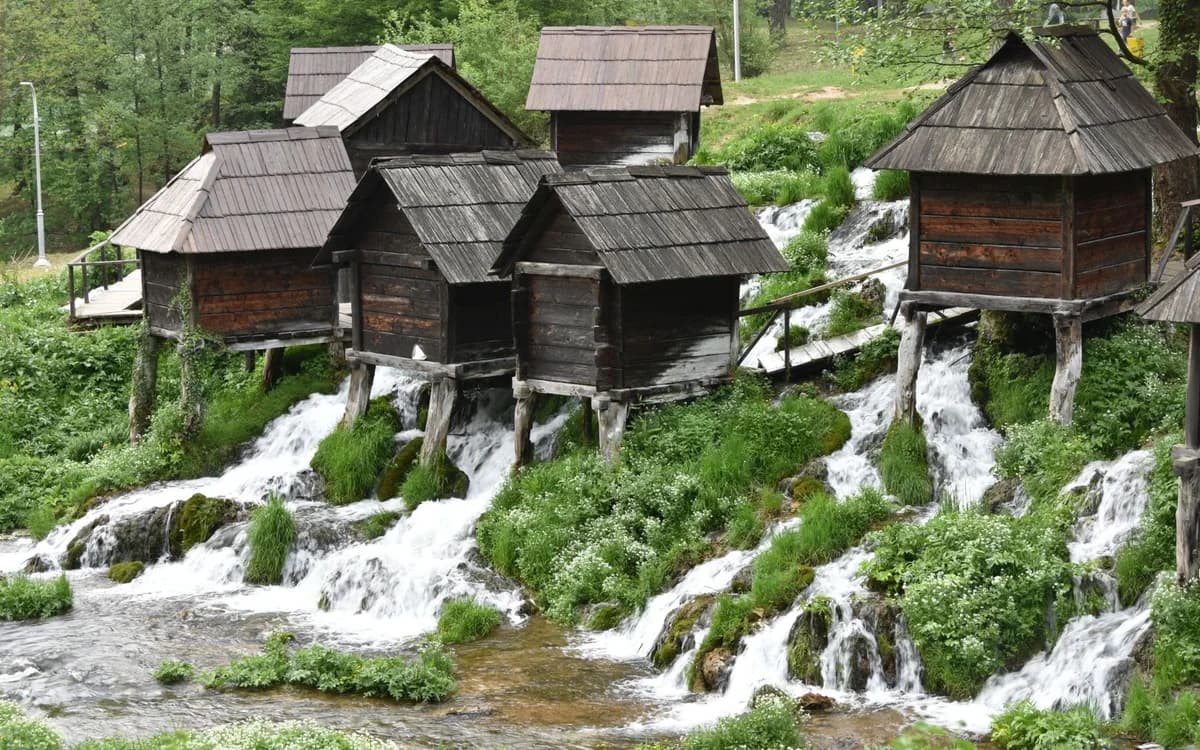
Mlinčići are traditional wooden watermills built on the tufa barrier between the Great and Small Pliva Lakes. For generations the water channels powered small mills used by surrounding communities to grind grain. The heritage value lies in the whole relationship between wooden structures, tufa, flowing water and lake landscape rather than in one monumental building.
The Pliva Lakes with the mill complex are protected as a cultural landscape and national monument. Sources vary in how they count individual mill structures, which is why the durable fact is more useful than a precise number: a clustered group of small timber mills survives where the water drops between the two lakes, preserving a traditional use of the Pliva that predates modern recreation.
What to see, and what deserves a closer look
Walk around the mill channels instead of photographing the cluster only from the first approach. Changes in angle reveal how the water is divided beneath and between the small wooden buildings.
Pair the mills with time on the lake shore. The calm open water and tightly engineered millrace create a stronger contrast when experienced in the same outing.
Look for these details
- The compact wooden mill buildings sitting directly above the flowing lake outfall.
- The tufa barrier and water channels that explain how the mills worked.
- The immediate connection with Great and Small Pliva Lakes.
How to plan the visit
Mlinčići belong to the Pliva Lakes outing, not the central waterfall-and-fortress walk. They lie several kilometers from the historic core, so protect time for the transfer rather than treating them as one final central sight.
Avoid planning around a promise that every mill is operating. Their cultural importance survives even when individual mechanisms are not functioning; current maintenance and water conditions can change.
Timing & conditions
Daylight is essential for reading the water channels and timber structures. Quieter morning or later-afternoon periods can make the small site easier to experience without congestion.
Respectful visiting
Keep to public paths, avoid entering or climbing mill structures unless explicitly permitted, and do not disturb water channels or private adjacent property.
Avoid these common mistakes
- Trying to walk out from the central Jajce sights without accounting for the separate lake geography.
- Repeating a precise mill count as if it were immutable when official and historical descriptions differ.
When a guide or organized transport helps.
Compare these options with the independent plan above. Choose the right departure base first. Sight photos illustrate the route; they are not operator photos.
Connect Jajce and Travnik without self-driving
A guided day joins the waterfall, lakes and historic town in one return route from Sarajevo.
- Departure base
- Sarajevo
- Time / format
- About 10 hours
Staying in Jajce instead? Our one-day guide helps you visit at your own pace.
Read our independent route guideQuestions before you go
Are Mlinčići in central Jajce?
No. They are in the Pliva Lakes landscape several kilometers from the historic center and should be planned as a separate outing.
Do the watermills still grind grain?
The site is preserved primarily as a heritage landscape. Do not assume every individual mill is currently operating; their value lies in the surviving structures and water system.
Nearby sights and a wider itinerary
Avoid planning around a promise that every mill is operating. Their cultural importance survives even when individual mechanisms are not functioning; current maintenance and water conditions can change.

Sources and further reading
History and visitor context are informed by these references. Geographic point provenance and licensed photo attribution are shown separately above; a Google Maps pin is not a historical source.