
The practical answer
Use the first part of the day for Jajce's compact historic core: Pliva Waterfall, the walled town, catacombs and fortress. Reserve the second part for the Pliva Lakes and Mlinčići watermills outside the immediate centre. If you are relying on intercity buses, protect the return connection and be willing to skip the lakes rather than race the whole day.
- The waterfall and major historic sights belong to one walkable central block.
- Climb to the fortress after understanding the lower town; the view is more useful with context.
- The Pliva Lakes and Mlinčići are a separate movement decision several kilometres from the core.
- A car or taxi makes the lakes much easier, while a bus-based day requires stricter time management.
- If Jajce is part of a road trip, an overnight often improves both the lakes and the historic centre.
Think of Jajce as two connected zones
The town centre is compact. The lakes are not. The day becomes much easier when those are planned as separate blocks instead of one continuous walking circuit.
| Morning | Waterfall + historic coreKeep the first block on foot and let the town's vertical layout connect the sights. |
|---|---|
| High point | Jajce FortressThe fortress sits above the old town and adds the clearest overview of the settlement. |
| Underground stop | CatacombsA compact but distinctive medieval rock-cut monument inside the historic area. |
| Afternoon | Pliva Lakes + MlinčićiPlan separate transport or cycling time from the centre. |
| Main mistake | Assuming the lakes are centralThe historic core is walkable; the lake landscape is the part that changes the transport plan. |
Use the sightseeing plan to choose the right base.
Compare where you want to spend your time with the area where you will sleep. Check each property's actual location, arrival arrangements and room terms before booking.
Plan the experience, not just the pin.
Use these sections for the route, timing and on-the-ground choices that shape the day.
Start low at Pliva Waterfall and read the town upward
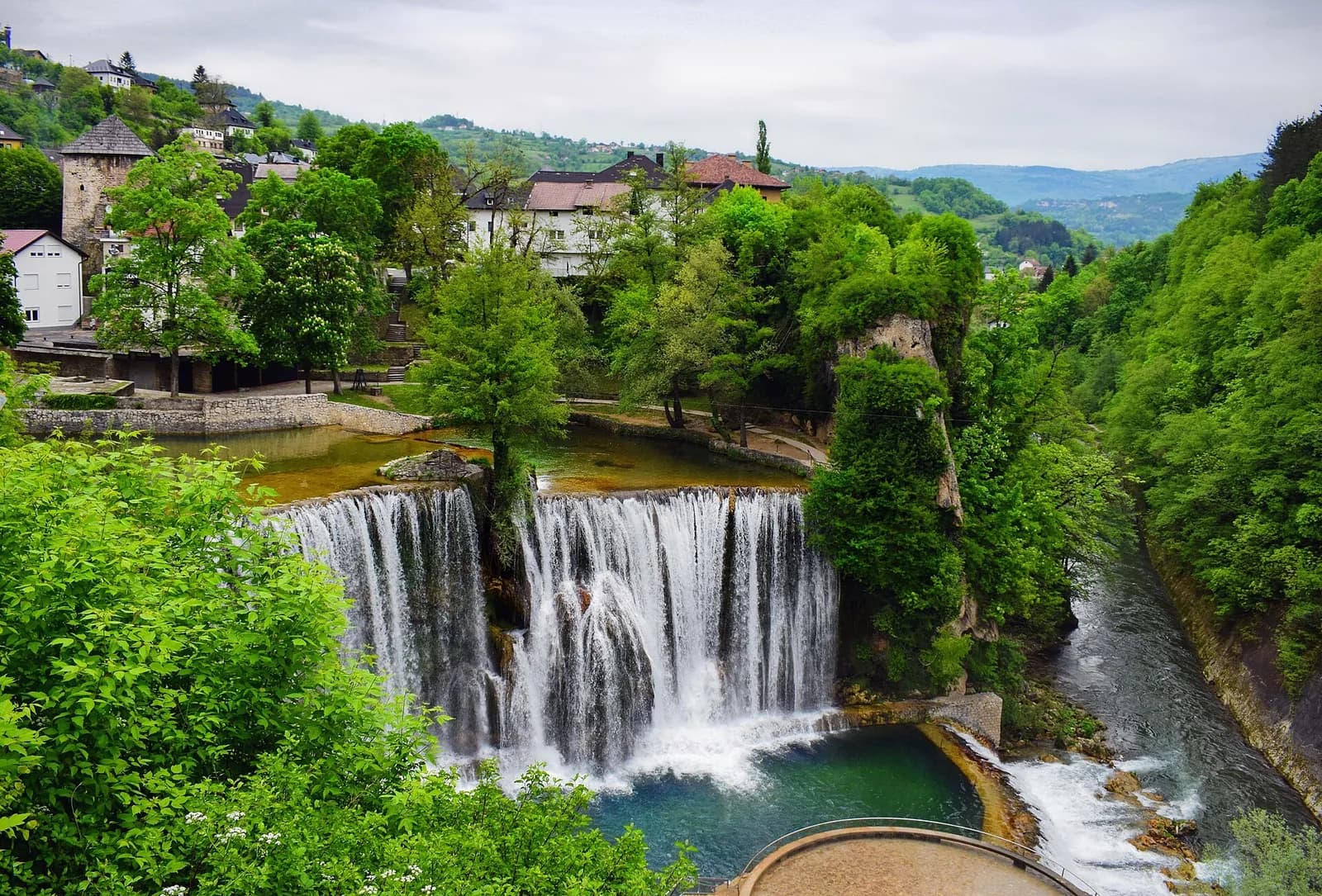
Jajce is easiest to understand from the bottom up. The Pliva drops into the Vrbas immediately beside the historic town, so the waterfall is not a remote natural excursion but part of the town's physical identity. Begin around the lower viewpoint area and pay attention to how quickly the streets rise toward the old core. That vertical relationship between river, walls and fortress is what makes Jajce feel different from a flatter heritage town.
After the waterfall, move into the historic streets rather than driving between central sights. The official municipal and tourism material highlights how many layers sit inside a very small area: medieval fortifications, religious buildings, the catacombs and later urban fabric. Walking keeps those layers connected. It also prevents the day from becoming a parking exercise before you have even reached the part of Jajce where a vehicle actually becomes useful.
Use the catacombs and fortress as different kinds of history stops
The catacombs are small enough to underestimate, but their value comes from being unlike the rest of the day. The Jajce heritage agency describes the monument as a rock-cut underground church associated with Hrvoje Vukčić Hrvatinić and the late medieval period. Treat it as a focused interior stop: the carved space, symbols and unusual underground setting are the point, not the amount of floor area.
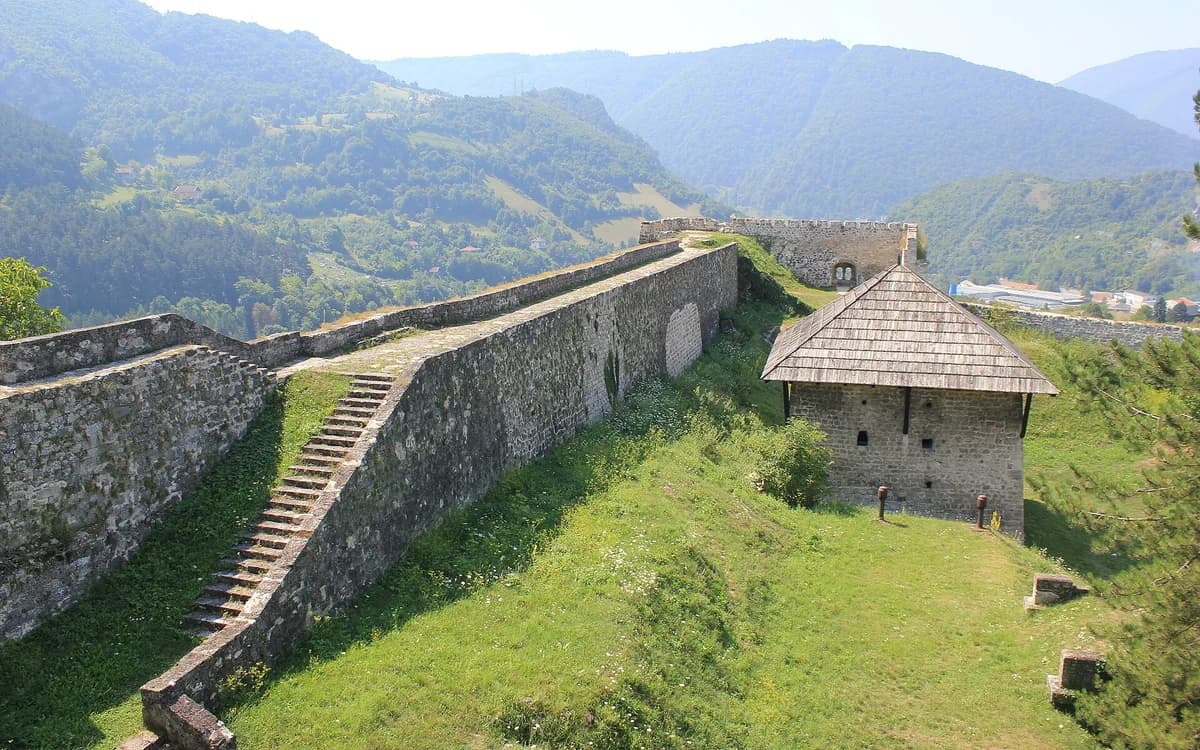
The fortress is the opposite experience—open, elevated and spatial. Climb after you have already walked the lower town so the view has meaning. From above, the relationship between the walls, roofs, surrounding valleys and modern town is much easier to read. Current access details can change, so use the official heritage agency for opening information rather than copying an old timetable into your day plan.
Make the Pliva Lakes a separate afternoon, not the last central sight
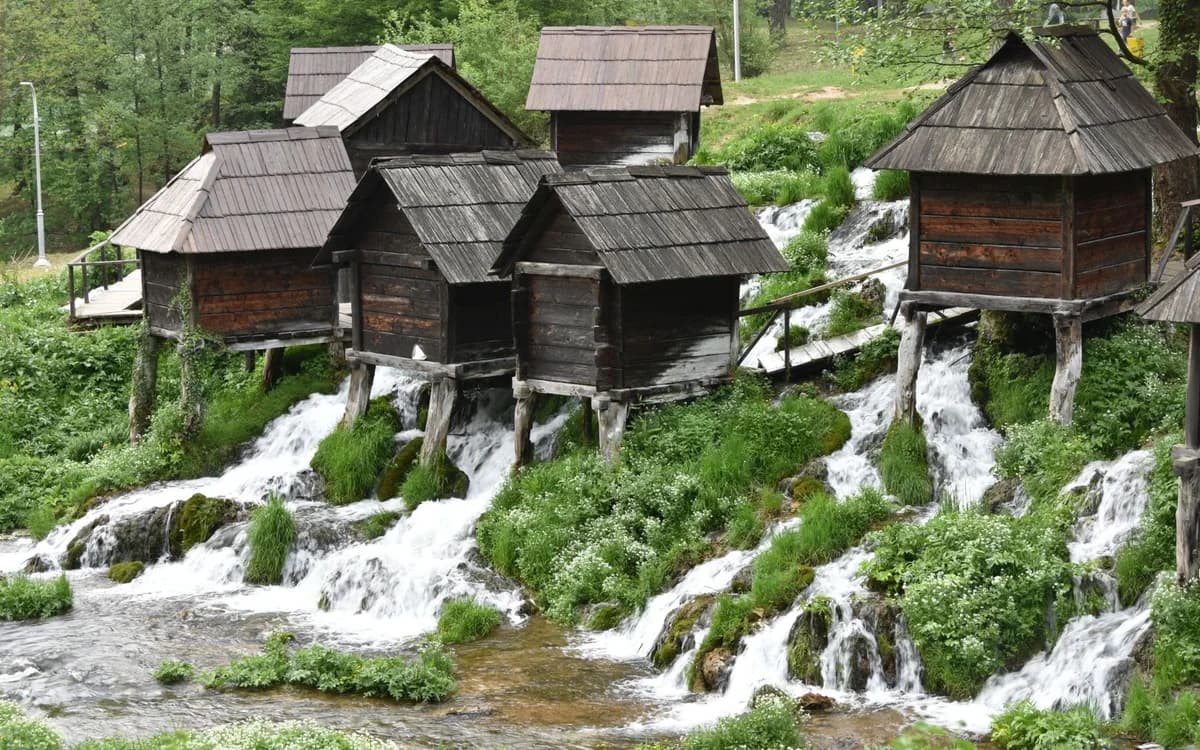
The Pliva Lakes are the part of a Jajce day that changes the logistics. Official tourism material places the lakes outside the immediate town centre, with the historic Mlinčići watermills between the lake areas. That means the lakes should be treated as an outing from Jajce, even though they belong to the same destination. Driving, taking a taxi, cycling or arranging another local transfer protects far more useful time than trying to pretend the entire landscape is one urban walking loop.
Once there, slow the pace again. The value is the contrast with the vertical stone town: open water, wooded surroundings and the small timber mills fed by the Pliva system. Do not make the watermills the only objective. Give the lake shore enough time that the trip feels like a landscape change rather than a long transfer for one photograph.
Official links
Car-free visitors should protect the return before adding the lakes
Jajce can work well on a bus-based Central Bosnia route because the historic core is compact once you arrive. The weak point is trying to combine a fixed intercity return with a separate lake transfer. Check the live coach connection first, then work backwards. If the departure time is tight, prioritize the waterfall, old town, catacombs and fortress and save the lakes for a trip with more flexibility.
This is a better compromise than rushing every central sight and still worrying about the final connection from the lakes. If you are continuing onward rather than returning to Sarajevo, an overnight can remove that pressure entirely. A night in Jajce gives you a second chance at the waterfall in different light and makes the lakes an easy morning or afternoon block instead of a logistical gamble.
One day versus one night: use the lakes as the deciding factor
If you only want the historic core, a well-planned day can be satisfying. If the Pliva Lakes, watermills, relaxed meals and evening streets are equally important, one night changes the experience more than adding another rushed stop. The hotel change buys you flexibility at exactly the part of Jajce that sits outside the compact central cluster.
This distinction also keeps the article from answering the separate 'Jajce or Travnik' base question. Jajce's sightseeing value is the combination of water, medieval history and a second landscape at the lakes. Whether that deserves the overnight depends on the rest of your route, which should be decided at itinerary level rather than by a universal rule.
| Trip shape | What fits well | What to be careful with |
|---|---|---|
| Day trip by car | Historic core + lakes | Do not overfill the return drive |
| Day trip by bus | Historic core first | Lake transfer versus fixed departure |
| 1 night | Historic core + relaxed lakes + evening | One additional hotel change |
| Road-trip stop | Use Jajce to advance the route | Avoid backtracking to Sarajevo if unnecessary |
Adding Travnik means choosing a different day
A Jajce day focused on the waterfall, historic core and lakes already has several distinct blocks. Adding Travnik means reducing time in those blocks or turning the day into an organized Central Bosnia route. Choose that format for the variety, not because it promises the same depth in both towns.
The Travnik city guide describes the fortress, cultural visits and town walk separately. Compare those priorities before booking a combined excursion or committing to an overnight. If you travel independently, check every connection and the final return; a combined guided itinerary is not evidence that the same sequence works on public transport.
Before your Jajce day
- Start with the waterfall and central historic core before using a vehicle for the lakes.
- Check current opening information for the fortress and heritage sites.
- Treat the Pliva Lakes and Mlinčići as a separate transport block.
- If travelling by bus, confirm the final useful departure before committing to the lakes.
- Consider one night when the lakes are as important to you as the historic centre.
Short answers before you set the day.
Can you see Jajce in one day?
Yes. With a car, one full day can cover the historic core and the Pliva Lakes. Without a car, the central sights are straightforward but the lakes need separate transport and may need to be cut around a fixed bus connection.
What are the must-see sights in Jajce?
For a first visit, prioritize Pliva Waterfall, the historic core, the catacombs and fortress, then add the Pliva Lakes and Mlinčići if time and transport allow.
Are the Pliva Lakes walkable from central Jajce?
They are outside the immediate historic core and are better treated as a separate outing. A car, taxi, bicycle or other local transfer makes the day substantially easier.
Is Jajce worth an overnight?
An overnight is especially useful when you want both the historic core and a relaxed lakes visit, or when Jajce is advancing a Central Bosnia route rather than functioning as a return day trip.
Official and primary links
Use these links for current visitor information from the relevant destination, attraction or operator.