

Is it worth including?
Miljacka river · central walking loop It fits naturally into a visit to this part of the destination.
- Allow
- 20–30 minutes for the bridge and assassination-site context; around 60 minutes with the Museum of Sarajevo 1878–1918
- Getting there
- Walk from Baščaršija or central Ferhadija; the bridge crosses the Miljacka at the edge of the compact central sightseeing zone.
- Ground / accessibility
- The bridge has a historic stone surface and gently raised crossing profile. Nearby pavements and crossings vary; the museum should be contacted directly if step-free interior access is essential.
Understanding Latin Bridge
A bridge at this crossing is documented from the Ottoman period, with an early wooden structure mentioned in the sixteenth century and a later stone bridge associated with the development of the Latinluk quarter on the left bank. The present form reflects rebuilding after flood damage at the end of the eighteenth century. Its name refers to the Catholic quarter historically known as Latinluk, not to the events of 1914.
The bridge became internationally famous because the assassination of Archduke Franz Ferdinand and his wife Sophie took place beside it on 28 June 1914. The crucial location is the street corner by the former Schiller shop, now the Museum of Sarajevo 1878–1918, rather than the middle of the bridge. That distinction matters: the bridge is the spatial reference for the event, while the museum corner is the documented assassination site.
The crossing also carries changing layers of public memory. In the Yugoslav period it was known as Princip Bridge, and memorial presentations around the assassination site changed repeatedly through the twentieth century. The current museum uses the corner to interpret Sarajevo under Austro-Hungarian rule as a broader period, helping visitors place the assassination inside a changing city rather than reducing the area to a single moment.
What to see, and what deserves a closer look
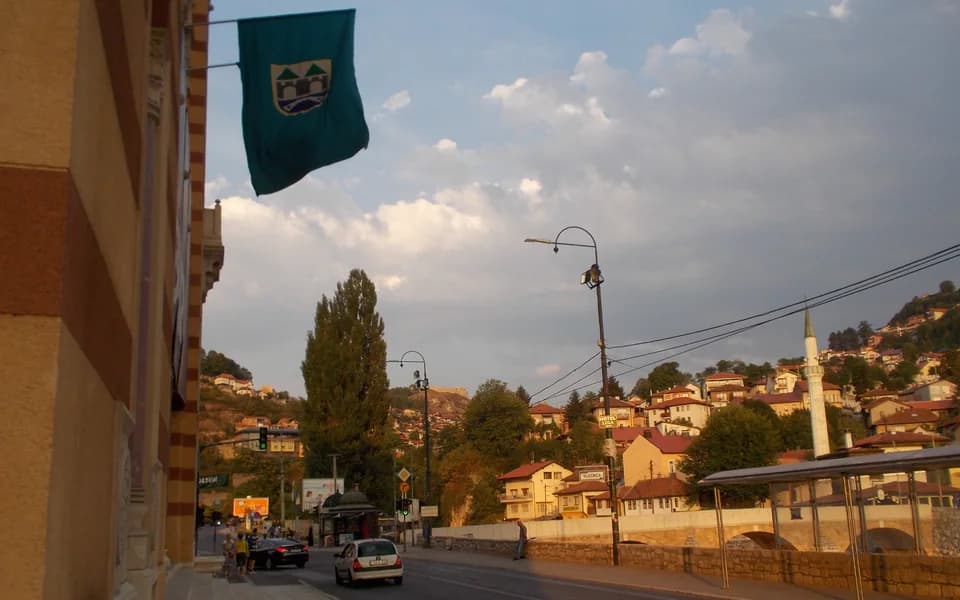
Cross the bridge once in each direction and look at the city around it before reading the assassination story. The Miljacka is narrow here, the old-town streets sit immediately to the north, and Austro-Hungarian façades begin to dominate westward. That compact geography explains why the bridge feels so embedded in everyday central Sarajevo despite its global historical associations.
Then spend time at the Museum of Sarajevo 1878–1918 on the north bank. Even if you do not enter, its exterior display marks the assassination location and makes the sequence of street, corner and bridge legible. Pairing the bridge with the museum avoids the common mistake of standing on the span and imagining the shooting occurred there.
Look for these details
- The view from the span toward the museum corner, which lets you separate the bridge from the actual 1914 assassination site.
- The former Schiller shop building, now the Museum of Sarajevo 1878–1918, with exterior interpretation tied directly to the event location.
- The transition along the river between the Ottoman old-town edge and later Austro-Hungarian city fabric.

How to plan the visit
Allow 20–30 minutes for the bridge and assassination-site context, or about an hour if you also visit the museum. It lies on an easy central walking line between Baščaršija, the riverfront and the Ferhadija side of the centre, so it should be folded into a walking day rather than treated as a separate excursion.
The bridge itself is outdoor public infrastructure and needs no timed slot. The museum has separate visitor arrangements, so check its current information if seeing the interior matters. If you are building a First World War-focused visit, give the museum more time than the bridge: most of the interpretive material is there.
Timing & conditions
Any daylight hour works for the outdoor site. Visit while the Museum of Sarajevo 1878–1918 is open if you want the assassination and Austro-Hungarian context rather than only the bridge view.
Respectful visiting
This is an ordinary pedestrian crossing as well as a historic site. Keep the bridge passable, and treat the assassination location as a place of historical violence rather than staging sensational photographs.
Avoid these common mistakes
- Saying Franz Ferdinand was shot 'on Latin Bridge'; the assassination took place beside the bridge, in front of the building that now houses the Museum of Sarajevo 1878–1918.
- Visiting only for the 1914 association and missing that the bridge is also part of a much older Ottoman river crossing and neighborhood history.
When a guide or organized transport helps.
Compare these options with the independent plan above. Choose the right departure base first. Sight photos illustrate the route; they are not operator photos.
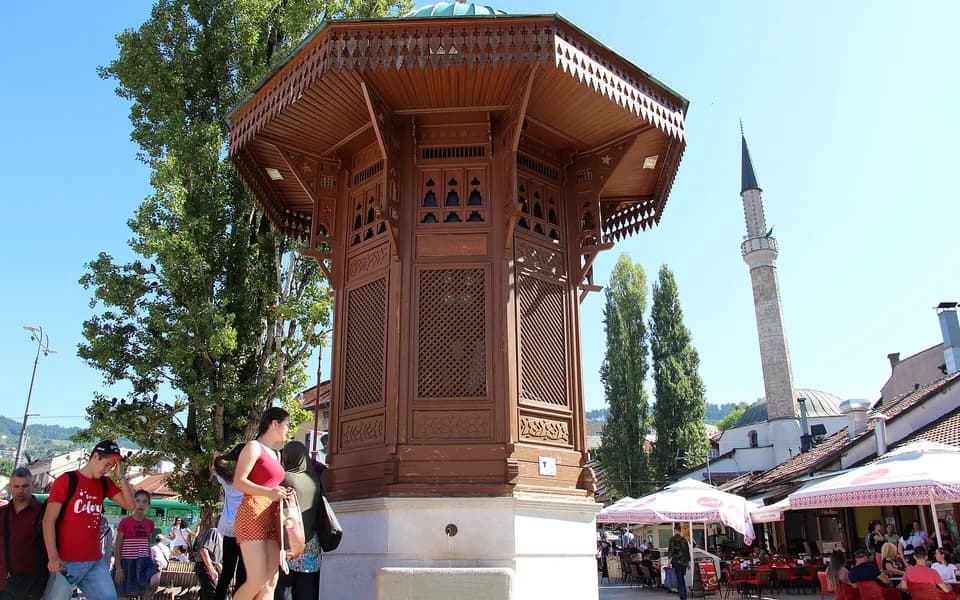
Get your bearings in Sarajevo’s Old Town
Start with the streets and stories, then leave time to return for coffee and a slower walk.
- Departure base
- Sarajevo
- Time / format
- About 2 hours
Prefer your own pace? Use our city guide to build an independent walk.
Read our independent route guideQuestions before you go
Was Archduke Franz Ferdinand assassinated on Latin Bridge?
No. The assassination took place at the street corner beside the bridge, in front of the former Schiller shop, which is now the Museum of Sarajevo 1878–1918.
How long should I allow for Latin Bridge?
Twenty to thirty minutes is enough for the bridge and outdoor context. Allow about an hour if you also want the museum interpretation of Austro-Hungarian Sarajevo and the assassination.
Nearby sights and a wider itinerary
The bridge itself is outdoor public infrastructure and needs no timed slot. The museum has separate visitor arrangements, so check its current information if seeing the interior matters. If you are building a First World War-focused visit, give the museum more time than the bridge: most of the interpretive material is there.
Sources and further reading
History and visitor context are informed by these references. Geographic point provenance and licensed photo attribution are shown separately above; a Google Maps pin is not a historical source.