
Is it worth including?
Uphill walk · broad city viewpoint It fits naturally into a visit to this part of the destination.
- Allow
- 45–75 minutes for an out-and-back walk from the old-town edge, longer with a wider Vratnik walk
- Getting there
- Most atmospheric on foot uphill from Baščaršija through Kovači toward Vratnik. The route gains elevation quickly, so treat the climb as part of the outing.
- Ground / accessibility
- The usual pedestrian approach is steep and historic surfaces around Vratnik can be uneven. Travelers with limited mobility should check current vehicle or drop-off access instead of assuming the viewpoint is reachable on a step-free route.
Understanding Yellow Fortress walk
Yellow Fortress, or Žuta tabija, is one of the bastions associated with the fortified Vratnik quarter above Sarajevo's old city. The defensive system was strengthened in the early eighteenth century after the 1697 sack of Sarajevo exposed how vulnerable the city was. Destination Sarajevo's heritage material places the Yellow Fortress within the old Vratnik walls and identifies it as an Ottoman-period fortification overlooking the historic centre.
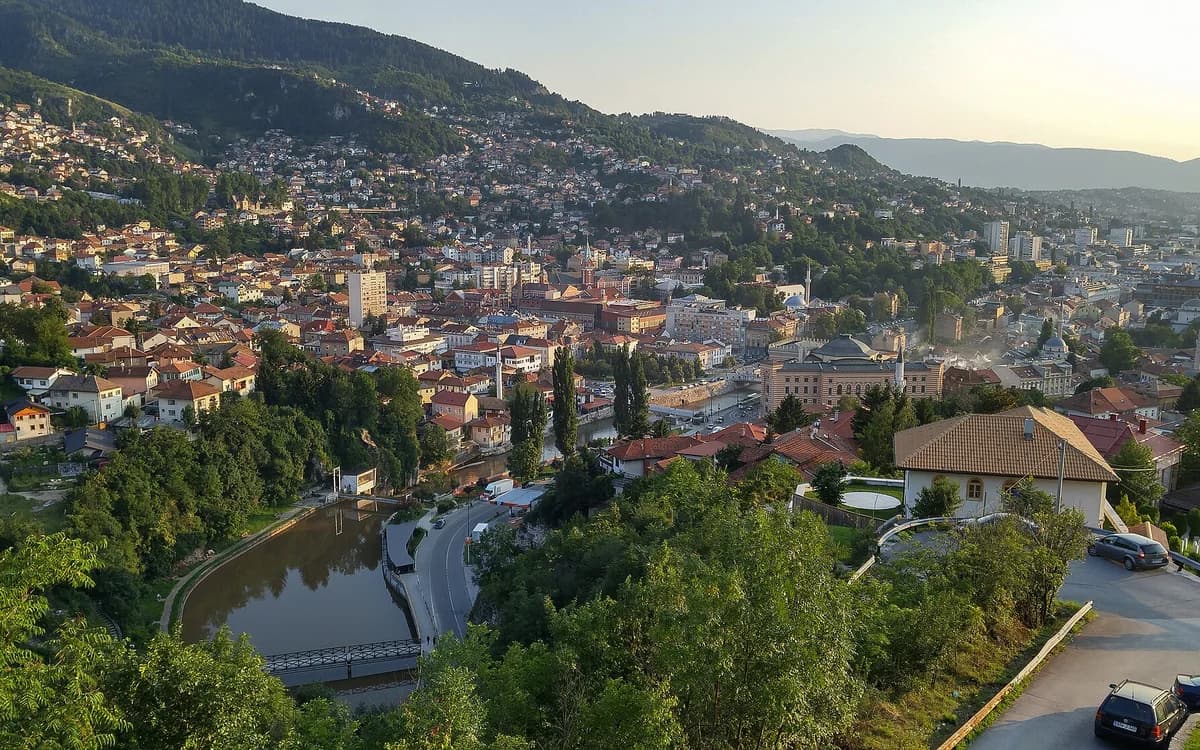
The bastion lost its military purpose as Sarajevo entered the Austro-Hungarian period, but its position on the Jekovac slope gave it a second life as a city viewpoint. The climb reveals the relationship between the Miljacka valley, Baščaršija and the steep residential hills far more clearly than a flat city map can.
The site also remains connected to living Sarajevo tradition. During Ramadan, a cannon is fired from the fortress at sunset to mark the breaking of the fast. That custom means the viewpoint can be a particularly meaningful gathering place at that time, not simply a scenic terrace for visitors.
What to see, and what deserves a closer look
The approach is part of the visit. Walking up from Baščaršija through Kovači and toward Vratnik makes the city's vertical geography increasingly obvious: roofs drop away, the valley widens and landmarks that felt separate on the ground line up below you. At the bastion, spend time reading the whole basin rather than taking one sunset photograph and leaving.
Look back toward the old town, then farther west along the dense valley floor and up the opposite slopes. The view is particularly useful before choosing accommodation because it explains why a short straight-line distance in Sarajevo can hide a substantial climb. If you continue deeper into Vratnik, treat that as a neighborhood walk rather than assuming the Yellow Fortress and other fortifications are one compact monument.
Look for these details
- The full view over Baščaršija and the Miljacka valley, which makes Sarajevo's valley-floor-versus-hills geography immediately understandable.
- The surviving bastion walls as part of the wider Vratnik defensive system rather than a stand-alone castle complex.
- The Ramadan sunset cannon tradition, still tied to the rhythm of fasting and iftar in the city.
How to plan the visit
Allow 45–75 minutes for the climb, viewpoint and return from the edge of Baščaršija; add more if you want to wander through Vratnik. The common walking approach is uphill, so build the viewpoint into a day when you are comfortable with a sustained climb rather than squeezing it between tightly timed indoor visits.
Sunset is popular, but clear visibility matters more than a specific clock time. If you visit during Ramadan, be aware that the sunset cannon is part of a religious tradition and local gathering. Arrive with enough time to settle in without crowding people who are there to break the fast.
Timing & conditions
Choose a clear day for the panorama. Late afternoon and sunset are popular; Ramadan sunset has additional cultural significance because of the traditional cannon firing.
Respectful visiting
Respect nearby cemetery and residential areas on the approach. During Ramadan, give space to people gathering for iftar and treat the cannon tradition as a living religious custom, not a staged attraction.
Avoid these common mistakes
- Judging the outing only by its short map distance from Baščaršija and not allowing for the sustained uphill walk.
- Treating the site as a sunset platform with no connection to Vratnik's fortifications, nearby communities and Ramadan tradition.
Questions before you go
Is the Yellow Fortress walk difficult?
It is a relatively short urban outing, but the common route from the old town climbs steadily. The gradient matters more than the map distance, especially in hot weather.
When is the best time to visit?
Choose a clear late afternoon if the panorama is your priority. Sunset is popular; during Ramadan the sunset cannon adds cultural significance and also draws local gatherings.
Nearby sights and a wider itinerary
Sunset is popular, but clear visibility matters more than a specific clock time. If you visit during Ramadan, be aware that the sunset cannon is part of a religious tradition and local gathering. Arrive with enough time to settle in without crowding people who are there to break the fast.

Sources and further reading
History and visitor context are informed by these references. Geographic point provenance and licensed photo attribution are shown separately above; a Google Maps pin is not a historical source.