
Is it worth including?
Wider excursion · plan transport separately This is a separate outing outside the compact city walking area.
- Allow
- 90 minutes to 2 hours for the spring, tekke and a short Blagaj riverside walk
- Getting there
- Treat Blagaj as a separate excursion south-east of central Mostar. Road transport, taxi or an organized regional outing is more realistic than trying to fold it into the Old Town walking circuit.
- Ground / accessibility
- The riverside visitor area includes historic surfaces, narrow passages and level changes around the water and building. If step-free access to the tekke interior is essential, confirm the current route before travelling.
Understanding Blagaj Tekke & Buna spring
Blagaj developed where the Buna emerges from a vast karst cliff below the medieval fortress of Stjepan-grad. UNESCO's tentative-list description treats the settlement as a combined natural and architectural ensemble whose Ottoman-period urban form grew along the river in the fifteenth and sixteenth centuries. Water, roads, religious buildings, mills and residential quarters were organized together rather than as separate scenic elements.
The Blagaj Tekke stands immediately beside the source. UNESCO records that the surviving musafirhana, or guest house, and turbe form a single ensemble with the cliff, spring and old mill landscape. The complex is generally associated with the early Ottoman development of Blagaj, while the surviving guest-house form was rebuilt in 1851 after earlier phases. Its value therefore lies in continuity and setting as much as in one precise construction date.
The tekke belongs to Bosnia and Herzegovina's Sufi religious heritage and remains a sacred place, not simply a riverside historic house. Its extraordinary position has made it one of Herzegovina's most photographed sites, but reducing the visit to the white building beneath the cliff misses the broader Blagaj ensemble: the Buna, the old settlement, bridges, mills and fortress all explain why this location developed.
What to see, and what deserves a closer look
Walk to the source before deciding where the 'main' view is. From the riverbank the cliff dominates; from the tekke side the architecture appears pressed between rock and water. Moving between these perspectives makes the relationship between karst spring and built heritage much clearer than a single restaurant-terrace photograph.
If the tekke is open to visitors, enter as a sacred residential-religious complex rather than as a decorative interior. Afterwards, spend a little time along the Buna instead of immediately returning to Mostar. Blagaj works best as a small settlement visit, with the spring as its anchor, not as a five-minute bus stop.
Look for these details
- The Buna spring emerging directly from the high karst cliff, which is the natural reason the settlement and religious complex occupy this exact location.
- The surviving tekke musafirhana and turbe integrated tightly with the cliff, river and old mill landscape.
- The wider Blagaj urban ensemble along the Buna, which turns the visit from a single building photograph into a coherent historic settlement.

How to plan the visit
Allow about 90 minutes to two hours for the spring, tekke and a short riverside walk. Blagaj is a separate outing from central Mostar, so solve transport before the day begins and avoid scheduling it as though it were another Old Town sight reached on foot from Stari Most.
The riverside can be busy in warm months and the experience changes with water, weather and visitor levels. Arrive earlier if quiet landscape views matter. Visitor access to the religious interior can vary, so confirm current arrangements locally and do not rely on copied opening times or fees.
Timing & conditions
Earlier in the day is generally calmer in busy seasons. Water, weather and crowd levels change the feel of the site; check current site information rather than planning around a fixed schedule copied elsewhere.
Respectful visiting
The tekke is a sacred Islamic/Sufi site. Dress modestly, follow shoe and photography guidance, keep voices low and respect any restricted worship or residential areas.
Avoid these common mistakes
- Treating Blagaj as a walkable extension of Mostar's Old Town instead of planning it as a separate transport outing.
- Photographing the tekke only from across the water and leaving without understanding that it is an active sacred site within a much larger historic and natural ensemble.
When a guide or organized transport helps.
Compare these options with the independent plan above. Choose the right departure base first. Sight photos illustrate the route; they are not operator photos.

Make a day of Blagaj, Počitelj and Kravica
An organized departure from Mostar can simplify the transfers between three very different stops.
- Departure base
- Mostar
- Time / format
- About 5–8 hours
Compare the stop order and transport choices in our independent route guide.
Read our independent route guide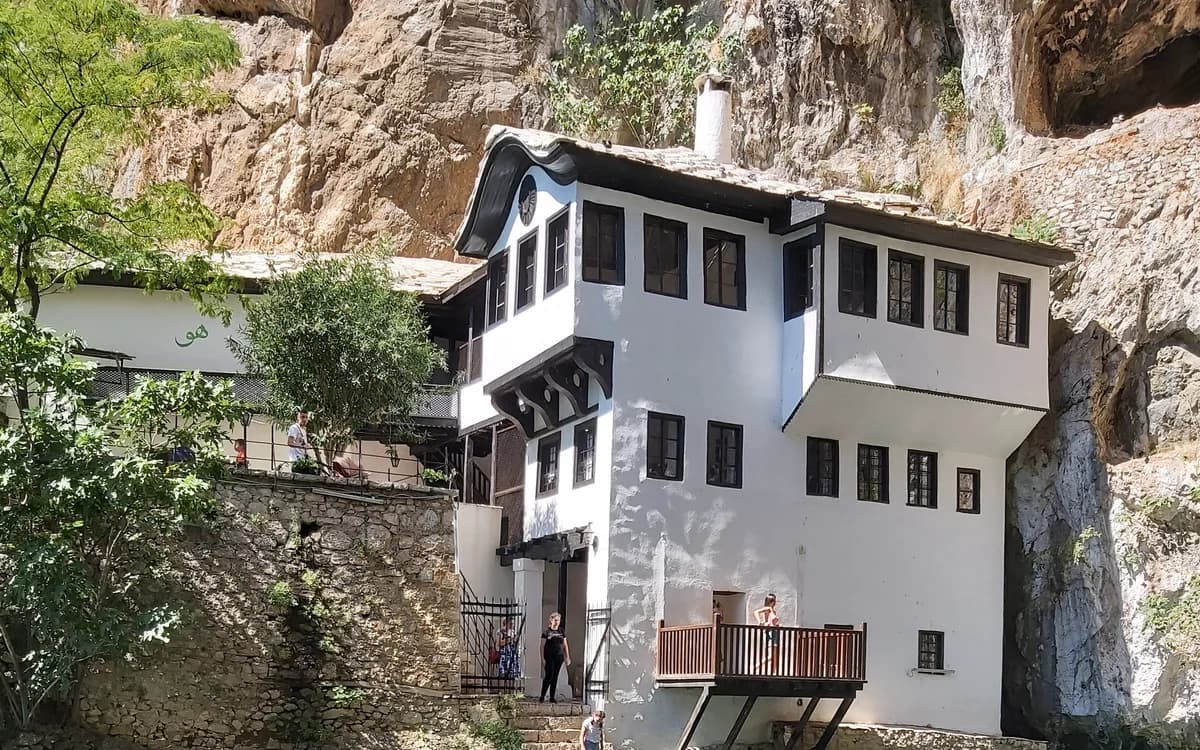
See Herzegovina while keeping a Sarajevo base
Choose this when an organized return day fits your trip better than moving your overnight base to Mostar.
- Departure base
- Sarajevo
- Time / format
- Full-day experience
Compare the longer day with an overnight in Mostar before choosing.
Read our independent route guideQuestions before you go
Can I walk to Blagaj from Mostar Old Town?
Blagaj is a separate settlement outside the compact Mostar sightseeing core. Plan road transport, a taxi or an organized regional outing rather than treating it as the next stop on an Old Town walk.
Is the tekke only a tourist attraction?
No. It belongs to Bosnia and Herzegovina's Sufi religious heritage and should be visited as a sacred site. Current visitor access should always yield to religious use and local rules.
Nearby sights and a wider itinerary
The riverside can be busy in warm months and the experience changes with water, weather and visitor levels. Arrive earlier if quiet landscape views matter. Visitor access to the religious interior can vary, so confirm current arrangements locally and do not rely on copied opening times or fees.
Sources and further reading
History and visitor context are informed by these references. Geographic point provenance and licensed photo attribution are shown separately above; a Google Maps pin is not a historical source.