
Is it worth including?
Old Town · river crossing · stone approaches It fits naturally into a visit to this part of the destination.
- Allow
- 60–90 minutes for bridge, approaches and viewpoints; half a day for a fuller Old Town circuit
- Getting there
- Best reached on foot from central Mostar. Once in the Old Town, continue on foot between the bridge, bazaar and nearby landmarks rather than moving the car between stops.
- Ground / accessibility
- The bridge has a steep arched profile and polished historic stone underfoot, with similarly uneven approaches. It is difficult for many wheelchair users and travelers with limited mobility; use accessible riverside or street viewpoints where appropriate and confirm any assisted route locally.
Understanding Stari Most & the Old Town
Stari Most was built in 1566 by Mimar Hajruddin, an architect associated with the school of the great Ottoman master Sinan. Its single stone arch replaced earlier crossings and became the organizing landmark of Mostar, whose name is linked to the bridge keepers, the mostari. The bridge and its flanking towers helped bind commercial streets on the two banks into a single urban centre.
On 9 November 1993, during the war in Bosnia and Herzegovina, the bridge collapsed into the Neretva after sustained shelling. Its destruction became one of the most visible images of the war's assault on shared cultural heritage. An international reconstruction project used historical documentation and traditional building approaches to recreate the bridge, which reopened in 2004.
In 2005 UNESCO inscribed the Old Bridge Area of the Old City of Mostar on the World Heritage List. The designation is not only about the arch itself: it recognizes an urban ensemble where Ottoman, Mediterranean and later European layers meet. UNESCO also emphasizes the reconstructed bridge's symbolic role in reconciliation and international cooperation, a meaning that sits alongside its everyday function as a pedestrian crossing.
What to see, and what deserves a closer look
Cross Stari Most slowly, but do not make the crown of the arch your only viewpoint. The stone surface rises sharply, and the best understanding comes from moving between the bridge, the riverside approaches and viewpoints that show the arch in profile. The Tara and Halebija towers frame the crossing and remind you that the bridge once operated within a defended urban system.
Spend time on both banks. Kujundžiluk and the old bazaar are dense with visitors, shops and cafés, while lower viewpoints reveal the scale between the bridge and the Neretva. Early or late in the day the masonry and river are easier to read without the centre-of-day crowd, but the old town remains a living commercial area rather than a monument that can be experienced only in silence.
Look for these details
- The full curve of the 1566-style reconstructed stone arch seen from river-level or bank-side viewpoints rather than only from on top of the bridge.
- The Tara and Halebija towers, which frame the crossing and connect it to the defensive and commercial structure of the historic town.
- The transition from the bridge directly into Kujundžiluk and the stone-lane bazaar, demonstrating why UNESCO treats the area as an urban ensemble.
How to plan the visit
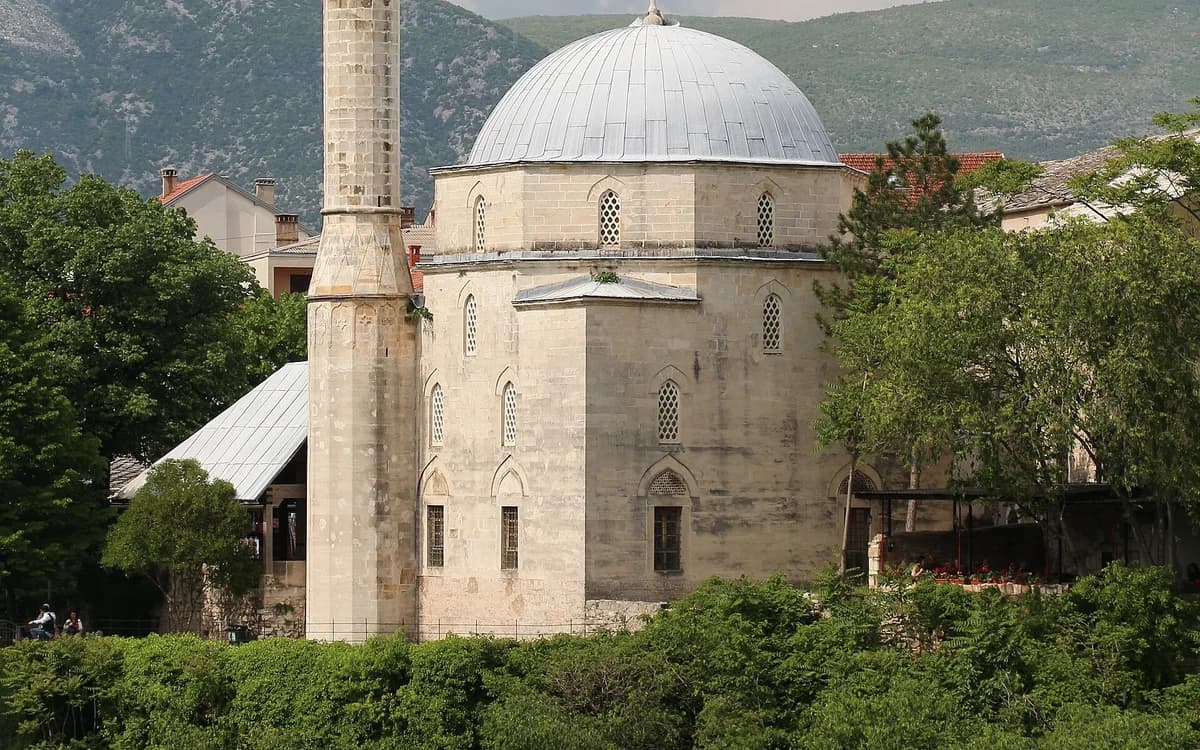
Allow at least 60–90 minutes for the bridge, old-town approaches and one or two lower viewpoints; a deeper Old Town visit can easily take half a day. The bridge belongs in the middle of a walking circuit that also includes Koski Mehmed Pasha Mosque and the bazaar rather than as a drive-up photo stop.
The stone approaches are steep and can be slick when wet or crowded. Wear footwear with grip and avoid planning a rushed crossing with luggage. If you want museums, tower interiors or organized diving-related experiences, verify their current access separately; the outdoor World Heritage streets and the individual attractions do not share one universal ticket or schedule.
Timing & conditions
Early morning gives more space on the bridge; late afternoon offers softer light. Midday can be busy and hot in summer. Check current event arrangements if bridge-diving competitions or major events are scheduled.
Respectful visiting
Keep the crossing moving, do not block the crown of the bridge for long photo sessions, and never imitate bridge diving independently. Respect worship sites, residents and businesses throughout the surrounding Old Town.
Avoid these common mistakes
- Crossing once, taking a selfie at the top and leaving without seeing the bridge in profile from below or exploring both banks.
- Treating the current bridge as untouched sixteenth-century fabric; the original was destroyed in 1993 and the present bridge is the internationally reconstructed structure completed in 2004.
When a guide or organized transport helps.
Compare these options with the independent plan above. Choose the right departure base first. Sight photos illustrate the route; they are not operator photos.
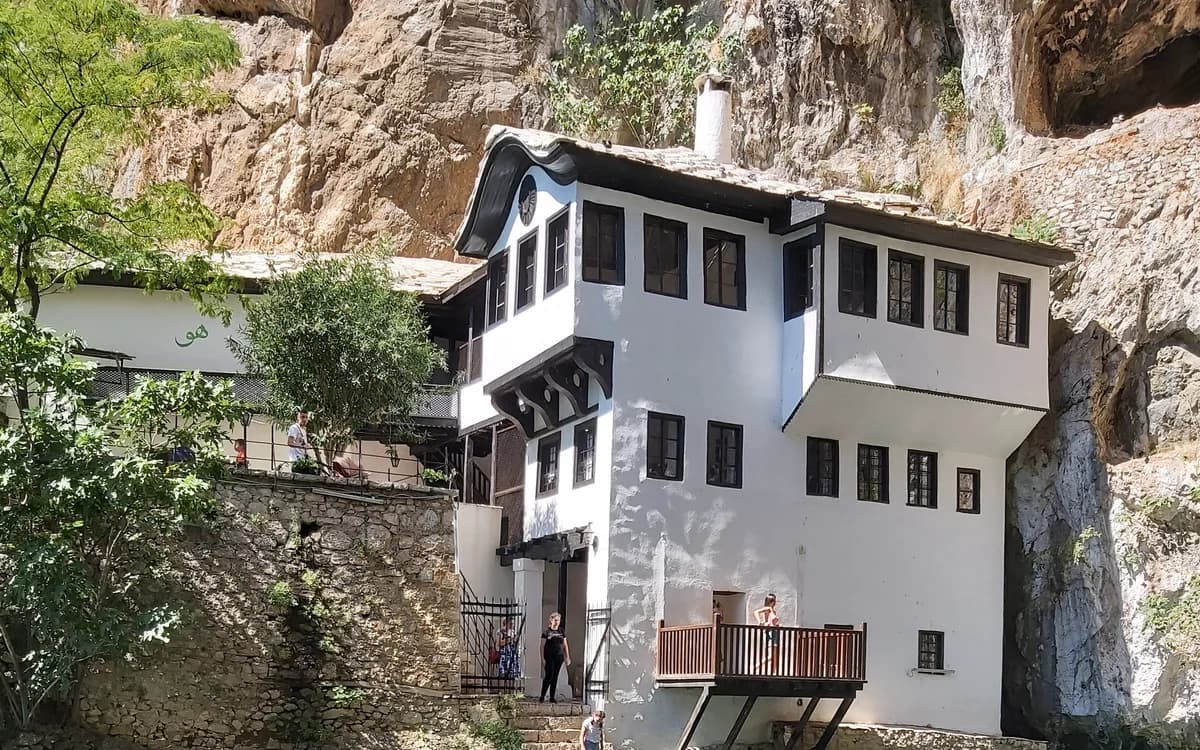
See Herzegovina while keeping a Sarajevo base
Choose this when an organized return day fits your trip better than moving your overnight base to Mostar.
- Departure base
- Sarajevo
- Time / format
- Full-day experience
Compare the longer day with an overnight in Mostar before choosing.
Read our independent route guide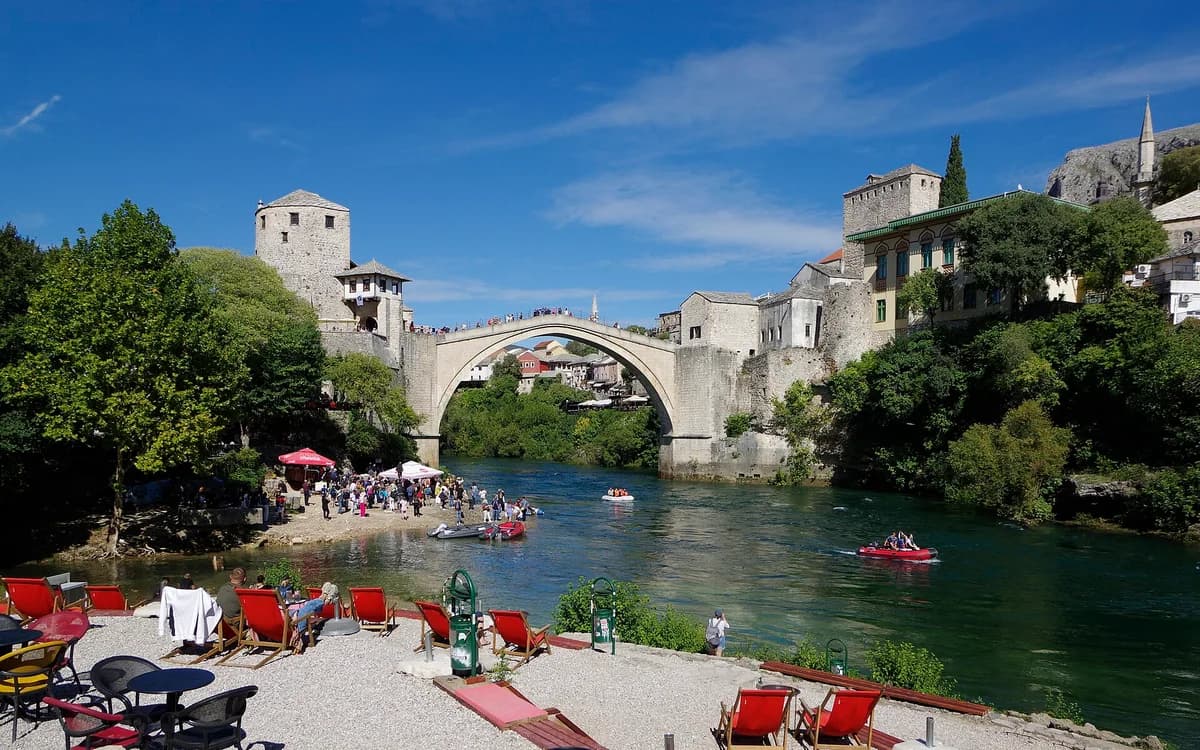
Look beyond the Old Bridge in Mostar
Choose a city walk for historical context; save the regional waterfalls and villages for another day.
- Departure base
- Mostar
- Time / format
- City walking experience
Our Mostar guide also works as an independent city plan.
Read our independent route guideQuestions before you go
Is the Old Bridge original?
The sixteenth-century bridge was destroyed in November 1993. The present bridge was reconstructed through an international heritage project and reopened in 2004, using historical evidence and traditional approaches.
How long should I spend around Stari Most?
Allow at least 60–90 minutes for the bridge, approaches and viewpoints. Give yourself half a day if you also want the bazaar, mosque, museums and a slower look at both banks.
Nearby sights and a wider itinerary
The stone approaches are steep and can be slick when wet or crowded. Wear footwear with grip and avoid planning a rushed crossing with luggage. If you want museums, tower interiors or organized diving-related experiences, verify their current access separately; the outdoor World Heritage streets and the individual attractions do not share one universal ticket or schedule.
Sources and further reading
History and visitor context are informed by these references. Geographic point provenance and licensed photo attribution are shown separately above; a Google Maps pin is not a historical source.