
Is it worth including?
Historic core · same walking circuit as Stari Most It fits naturally into a visit to this part of the destination.
- Allow
- 30–60 minutes, longer if a minaret visit is available and you take time in the courtyard
- Getting there
- Walk north through the Old Town on the left bank from Stari Most; the mosque sits directly in the compact historic sightseeing area.
- Ground / accessibility
- The courtyard is the least demanding part of the visit. Historic thresholds and any minaret climb involve steps; travelers who need step-free access should confirm the current interior route before paying for entry.
Understanding Koski Mehmed Pasha Mosque
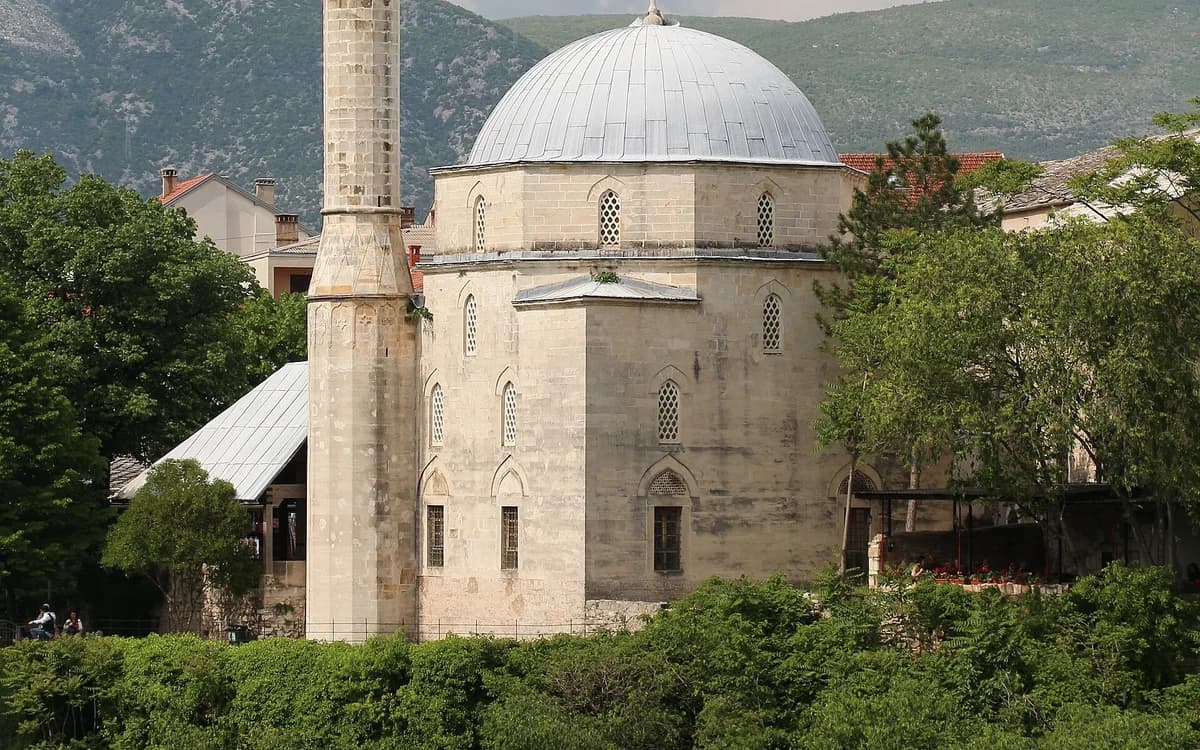
Koski Mehmed Pasha Mosque was built in the early seventeenth century on the left bank of the Neretva, immediately north of Mostar's Old Bridge. Explore Mostar dates the building to 1618 and identifies its founder as Koski Mehmed Pasha. Its riverside position makes it part of the same dense Ottoman urban fabric as the bazaar and bridge rather than a detached religious monument.
The mosque's domed prayer hall, slender minaret and courtyard form a compact ensemble. Interior decoration includes calligraphy and floral and geometric motifs, while the courtyard opens toward one of the classic views of Stari Most. The complex is formally recognized by Bosnia and Herzegovina's Commission to Preserve National Monuments, which lists the Koski Mehmed Pasha mosque and medresa as a protected architectural ensemble.
The mosque suffered serious damage during the 1990s war and was subsequently restored. It functions today both as a place of Muslim worship and as a major visitor landmark in the Old Town. That dual role should shape the visit: the celebrated bridge view is secondary to the building's continuing religious purpose.
What to see, and what deserves a closer look
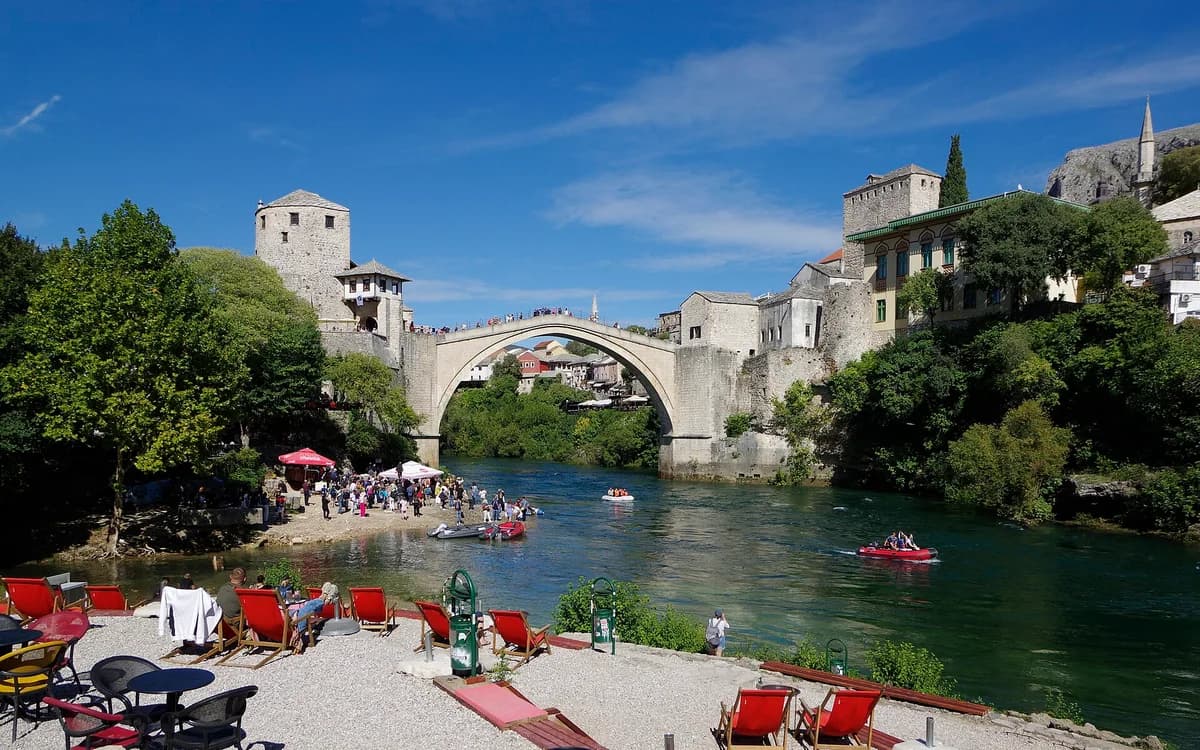
Start in the courtyard, where the mosque's position above the Neretva becomes clear. This is one of the best places to understand how tightly Stari Most, the bazaar and sacred buildings sit together. If the prayer hall is open to visitors, look at the painted and calligraphic decoration before turning the entire visit into a hunt for the panoramic viewpoint.
Where minaret access is currently offered, the climb is physically very different from the courtyard visit: it involves confined historic stairs and is not suitable for everyone. The reward is a high perspective over the bridge and tiled roofs, but the courtyard already provides a strong view for travelers who do not want the climb.
Look for these details
- The courtyard view toward Stari Most, which reveals the compressed geography of the Old Town from above the Neretva.
- The restored domed prayer hall with calligraphic, floral and geometric decoration.
- The mosque-and-medresa ensemble recognized as a national monument, placing the famous viewpoint inside a protected religious complex.
How to plan the visit
Allow about 30–60 minutes depending on whether the interior and minaret are accessible and whether you choose to climb. It is only a short walk through the Old Town from Stari Most, so make it part of the same pedestrian circuit rather than scheduling a separate journey.
Visitor access, tickets and minaret arrangements can change and worship always takes priority. Check current information at the site or through Mostar's tourism channels. Dress for a religious building even if your main interest is the viewpoint.
Timing & conditions
Visit outside congregational prayer when possible and verify current visitor/minaret access locally. Morning or later afternoon can be calmer than the busiest Old Town hours.
Respectful visiting
Dress modestly, follow shoe and photography instructions, keep voices low and never enter prayer areas when access is restricted. Treat the minaret viewpoint as part of an active mosque, not a viewing tower detached from worship.
Avoid these common mistakes
- Visiting only for the bridge photograph and ignoring that the building is an active mosque with its own religious etiquette.
- Assuming minaret access is automatic or suitable for everyone; current access can change and the climb uses historic stairs.
Questions before you go
Do I need to climb the minaret to enjoy the visit?
No. The courtyard already gives a strong view toward Stari Most, and the mosque interior is the more important cultural context. Treat the minaret as an optional extra if it is open and the stairs suit you.
Can I combine the mosque with Stari Most?
Yes. They belong to the same compact Old Town walking circuit on and around the left bank of the Neretva, so no additional transport is useful.
Nearby sights and a wider itinerary
Visitor access, tickets and minaret arrangements can change and worship always takes priority. Check current information at the site or through Mostar's tourism channels. Dress for a religious building even if your main interest is the viewpoint.
Sources and further reading
History and visitor context are informed by these references. Geographic point provenance and licensed photo attribution are shown separately above; a Google Maps pin is not a historical source.