
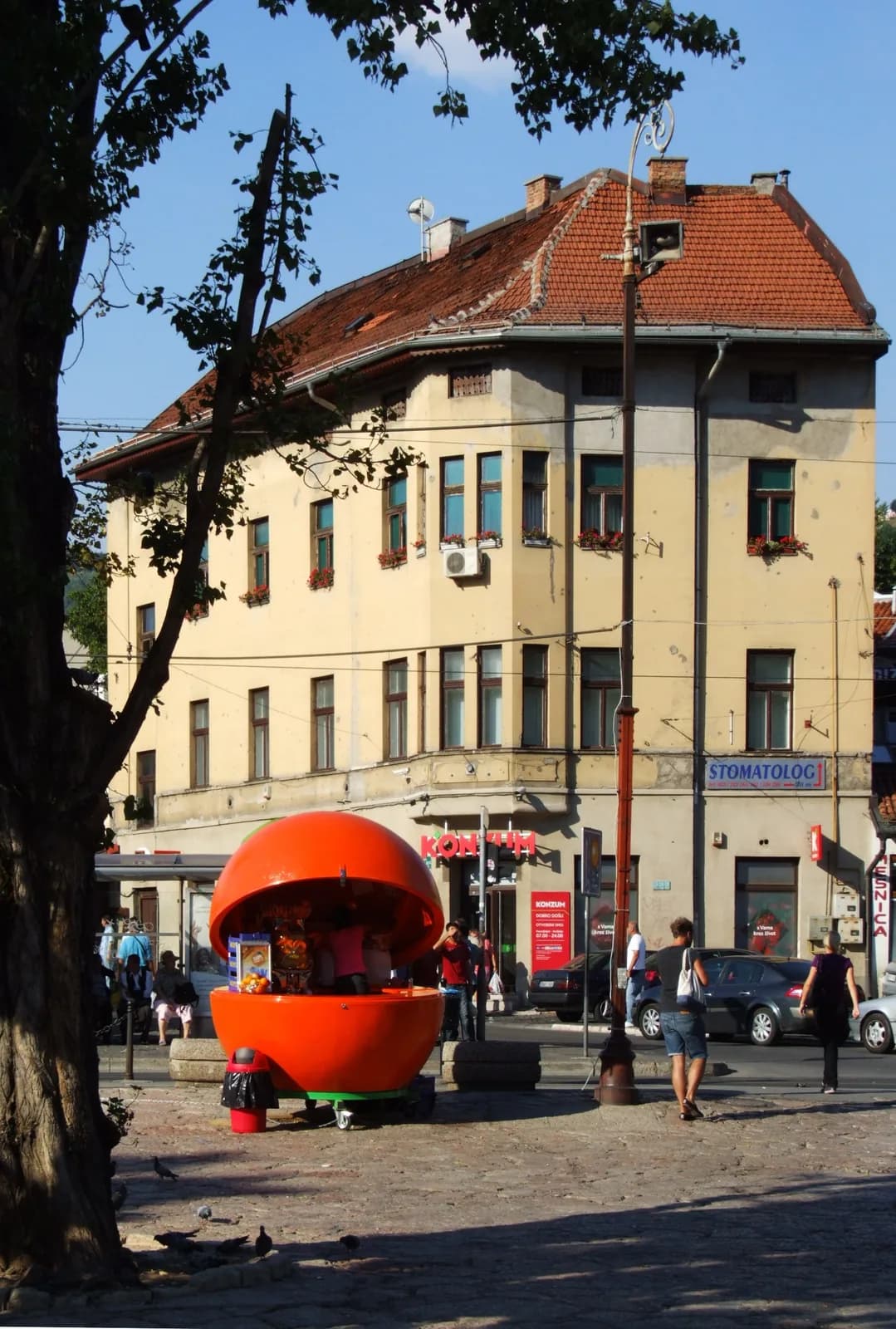
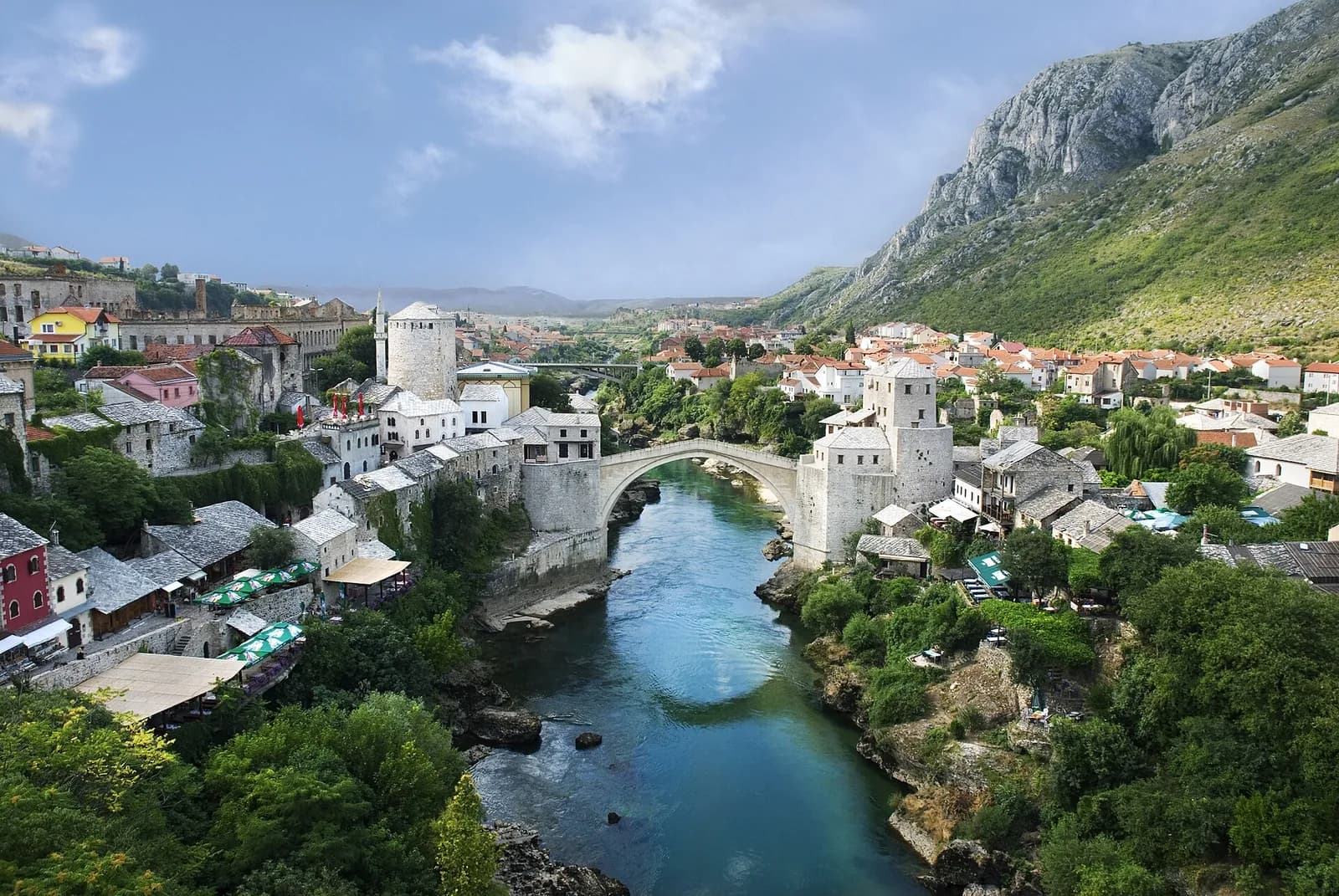
The practical answer
Start with the nights, not a list of attractions. For a first trip, choose two to four bases that solve different parts of the route, then connect them with the transport that is genuinely useful for that leg. Sarajevo and Mostar are the easiest anchors for a short car-light trip; Central Bosnia, Trebinje and Jahorina become more useful when the trip is longer or more road-based.
- Choose overnight bases before filling every day with sights.
- Use rail and coaches where they simplify the route; use a car where the trip spreads beyond the main corridors.
- Re-check live transport, road and mountain operations for the actual travel date.
Plan the shape of the trip before the details
The easiest Bosnia trips are not the ones with the longest attraction lists. They are the ones where each overnight base has a clear job and each transfer earns the time it takes.
| First-trip anchor | Sarajevo + MostarThe simplest pair for a city-led trip, with established rail/coach links between them. |
|---|---|
| Best third base | Choose by trip purposeJajce/Travnik for Central Bosnia, Trebinje for the far south, Jahorina for a dedicated mountain stay. |
| Car-free sweet spot | Main city corridorCentral Sarajevo and Mostar are the easiest bases to use without a car. |
| Where a car helps most | Multi-stop regional daysLakes, mountain clusters, countryside attractions and road-trip loops become easier. |
| Booking order | Route → live transport → exact stay locationDo not choose hotels first and force the itinerary around them later. |
Open the bases this guide talks about.
These links open the accommodation directory for each base; live room prices and availability remain on the booking provider.
1. Decide what the trip is really about
A Bosnia itinerary changes quickly depending on whether the priority is historic cities, a mountain stay, a road trip through Herzegovina or a slower route through Central Bosnia. That decision should come before hotel comparison because it determines which locations need to be easy at the beginning and end of each day.
For a first visit, Sarajevo and Mostar are the simplest high-value anchors because each works as a distinct overnight base and the rail corridor links them. Jajce, Travnik, Trebinje and Jahorina solve different travel problems rather than functioning as interchangeable add-ons.
2. Keep the number of bases under control
Changing accommodation every night can make a geographically small country feel much larger. A useful rule is to add a base only when it makes a different morning, evening or onward route meaningfully easier.
Sarajevo rewards a central valley-floor base for city time; Mostar rewards either Old Town immediacy or easier station/road access; Jajce splits between the historic core and the Pliva Lakes; Trebinje separates a walkable center from road-based regional trips. Those are real stay decisions, not just different names on an itinerary.
3. Match the trip length to the number of bases
Three days is enough for one city or a very tight Sarajevo–Mostar combination. Five days works better as a focused two-base trip. Seven days gives room for Sarajevo, Mostar and one meaningful extension, while roughly ten days lets Central Bosnia, Trebinje or a mountain stay join the route without turning every night into another check-in.
The useful number of days is therefore not a country-wide minimum. It is the amount of time that lets the bases you actually care about keep an evening, a morning and a sensible onward move.
4. Decide where a car earns its keep
A car is not automatically useful for every Bosnia trip. Central Sarajevo and Mostar work well without one, while countryside, mountain, lake and multi-stop regional days become easier with a car or an organized transfer.
If you drive, treat road conditions and overnight parking as live operational questions. BIHAMK publishes current road information, while the property itself is the best place to verify whether overnight parking is actually included or nearby.
5. Book in the order that removes uncertainty
Once the route shape is clear, verify the transport legs that have limited or seasonal service, then choose accommodation by exact location rather than a vague central label. Leave live room prices, cancellation terms and seasonal operations to the current booking or operator page.
The point of the planning stage is not to lock every hour. It is to remove the few uncertainties that can make a good accommodation choice behave badly once you arrive.
Finish the route with three practical checks
Choose the season for the experiences you want, then build a cost estimate from current quotes for that route. Keep nights, travel days, room count and group transport separate. A short two-base itinerary is easier to cost clearly than an undefined list of possible stops.
Prepare payment for the first transfer and any accommodation balance. The season, cost and money guides own those details; use this page to keep the booking order clear. Confirm the connections that make the route work before reserving an activity whose meeting time depends on an unverified journey.
The details that change the decision.
Use the short sections above for orientation; use these deeper notes when you are choosing the actual route, transfer or overnight.
Choose the trip style before you choose the route
Bosnia works differently as a city break, a road trip, a mountain trip and a nature trip. The same seven days should not produce the same itinerary for all four.
A city-first trip should concentrate nights where evenings and mornings on foot are valuable. That usually means Sarajevo and Mostar, with a third base only if it adds a genuinely different experience. A road trip can justify more movement because the car turns smaller towns into useful route breaks rather than awkward detours. A mountain trip should give the mountain its own nights instead of treating it as a long daily commute from a city hotel.
The practical test is simple: ask what you want to be doing at 08:00 and at 21:00. If the answer is different from what your current base offers, a new overnight may be justified. If the only reason to move is to tick another place off a list, the extra check-in is probably making the trip worse rather than better.
| Trip style | Best starting structure | What usually changes the plan |
|---|---|---|
| City-first | Sarajevo + Mostar | Airport timing, rail/coach schedule, Old Town location |
| Road trip | Sarajevo + Central Bosnia + Mostar/Trebinje | Parking, road conditions, avoiding backtracking |
| Mountain | Sarajevo + Jahorina | Lift/activity operations, transfer frequency, weather |
| Nature / river | City base + dedicated nature leg | Dispersed visitor zones, local transfer or car |
Use this as a route-design tool, not as a fixed itinerary.
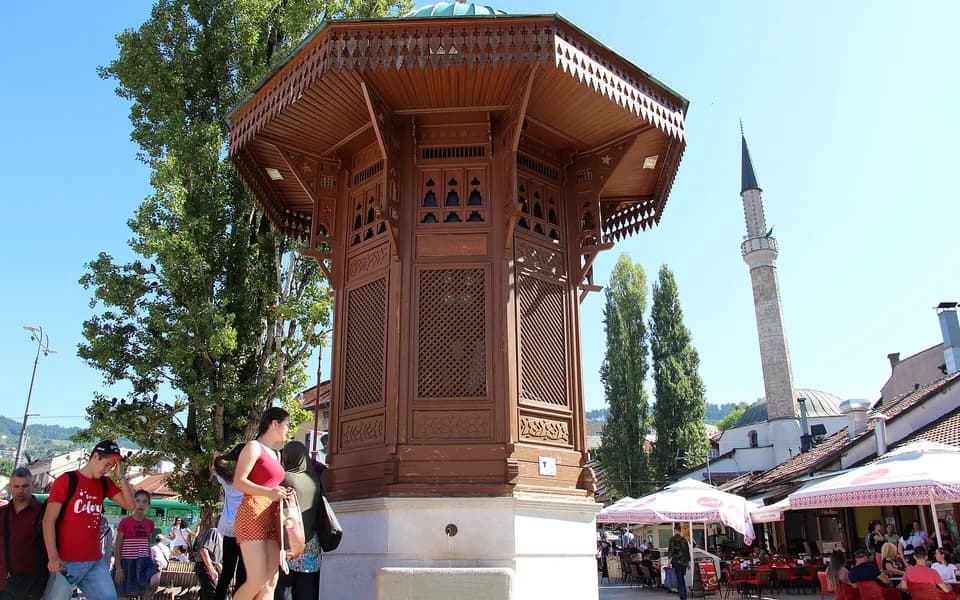
Build each overnight around the next morning
A good base is not simply close to an attraction. It makes the next useful movement easy.
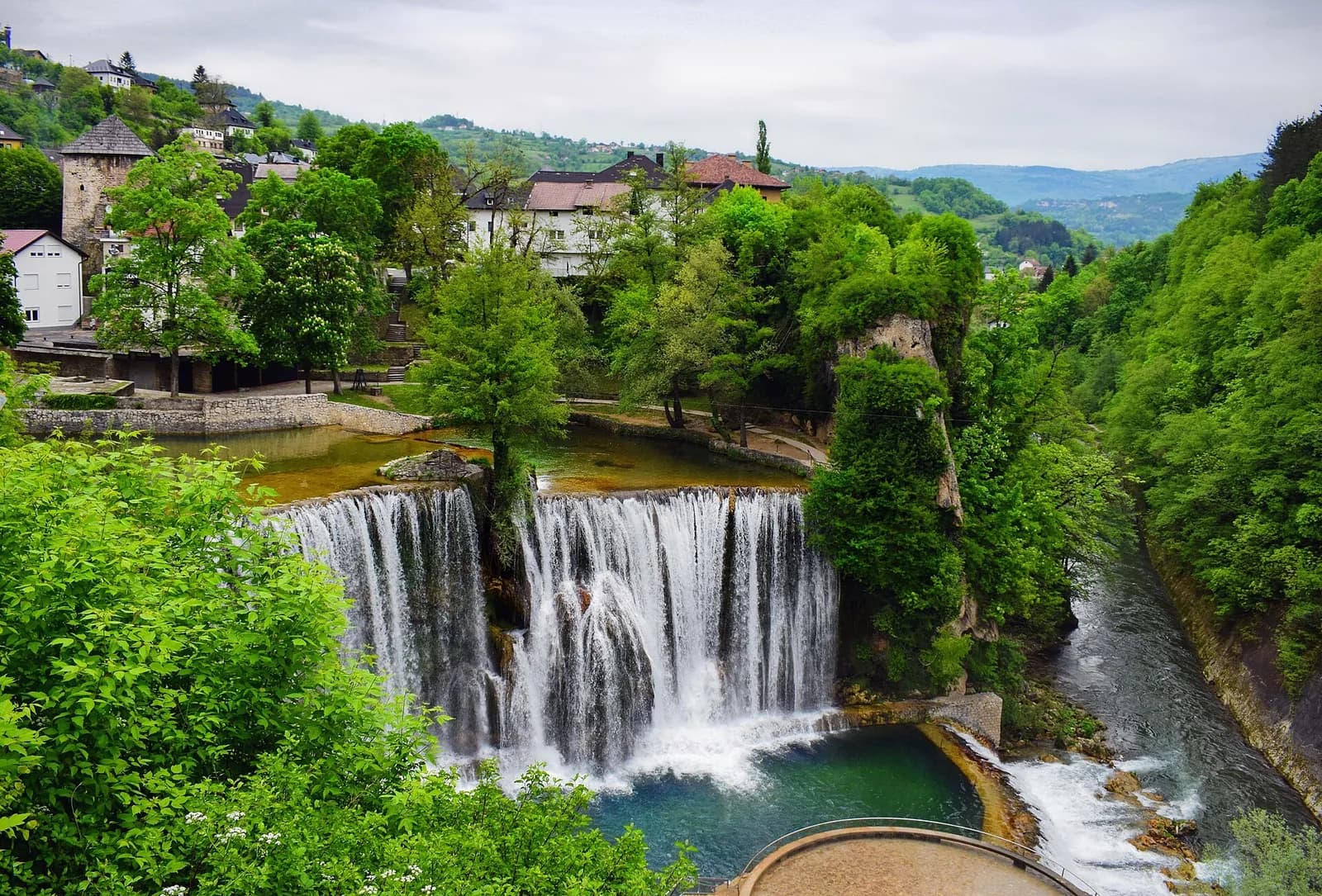
In Sarajevo, a valley-floor stay can make public transport, the station and a luggage-heavy arrival much easier than a beautiful hillside address. In Mostar, compare Old Town plans with the actual arrival terminal on your ticket and the final entrance route; a central address alone does not establish easier luggage or vehicle access. Jajce adds a second geography because the Pliva Lakes sit outside the compact historic core. Trebinje is walkable in the center but becomes a road-based base as soon as wineries, viewpoints or regional stops enter the plan.
That is why broad labels such as ‘central’ or ‘near the sights’ are not enough. Before booking, look at the actual map point, the station or road you will use the next morning, and the first thing you want to do after breakfast. The best stay is the one that reduces friction at both ends of the night.
- City sightseeing day: prioritize a walkable center and simple local transit.
- Early departure: move closer to the station, road exit or airport side only when it materially reduces risk.
- Road-trip night: verify parking and the morning exit route before choosing the prettiest address.
- Nature day: check whether the attraction is one site or several dispersed visitor zones.
Audit the transport chain, not just the longest leg
The weak point in a Bosnia itinerary is often the first or last 20 minutes rather than the intercity journey itself.
A train may be the obvious choice between two cities, yet a poorly located hotel can turn that easy journey into a long luggage walk or an extra taxi at each end. The same applies to coaches: the timetable might work perfectly while the arrival point is inconvenient for the stay you selected. For road trips, the equivalent mistake is choosing an Old Town address without checking how the car actually reaches it and where it stays overnight.
For every transfer, write down four things: how you leave the property, where the intercity leg starts, where it ends, and how you reach the next property. If any one of those steps is vague, fix it before booking a non-refundable room. This simple chain catches more real-world problems than comparing headline journey times.
Leave the volatile details until the route is stable
Transport timetables, road works, mountain operations and parking rules can change faster than the shape of a good itinerary. Decide the stable parts first—bases, sequence, approximate number of nights—then verify the volatile parts against the operator or authority for your travel date.
That also keeps you from over-planning. You do not need a spreadsheet for every café and museum. You do need confidence that the next base is reachable, the property location works for the arrival mode, and the route does not depend on a single fragile connection.
Before you book the first hotel
- Write the trip as a sequence of overnight bases, not attractions.
- For each base, name the morning/evening experience that justifies sleeping there.
- Check the complete transfer chain from one property door to the next.
- Use current operator/road/resort information for the date-sensitive pieces.
- Remove one base if the itinerary still works without it.
Short answers before you lock the route.
Do you need a car for a first trip to Bosnia?
Not necessarily. A Sarajevo–Mostar city trip can work well by rail, coach and local transport. A car becomes more useful when the route adds mountain bases, rural attractions, lake areas or several smaller stops in one day.
How many bases should a one-week Bosnia trip use?
Three bases is a practical starting point for many seven-day routes. Add a fourth only when it removes a meaningful backtrack or lets you experience a place at a better time of day.
Should you book transport or accommodation first?
Decide the route first. Then verify any transport leg with limited or seasonal service, and choose accommodation around the confirmed arrival/departure pattern.
Official and primary links
Use these links for live transport, road, weather or resort details referenced in the guide.