
The practical answer
Start with Mostar/Čitluk or Trebinje as your base, choose a named experience and confirm the venue before arranging transport. The Herzegovina Wine Route is a network of independent places, not a single ticketed tour. If drinking, use a completely sober designated driver or an independently confirmed transfer. Rural cellars are not automatically walkable from town.
Compare the options
| Decision | Mostar / Čitluk | Trebinje |
|---|---|---|
| Where to sleep | Mostar if the Neretva/Old Town anchors the wider itinerary | Trebinje if eastern Herzegovina and its own old town are the draw |
| Cellar geography | Čitluk, Paoča, Brotnjo and other distinct out-of-centre sites | Named Trebinje venues and separate nearby monastery/rural cellars |
| Real example to research | Čitluk Winery or Andrija Wine Cellars on HWR; no date-specific reservation confirmed | Vukoje Wine Gallery or Tvrdoš Wine Cellar on HWR; booking conditions vary |
| Food alongside wine | Check individually offered pairing/meal at the selected venue, or dine in Mostar itself | Town market/restaurant experience can be separate from a winery visit |
| Car and alcohol | Tour/transfer or non-drinking driver needed for any outlying tastings | Walk town centre when suitable; use booked transport for remote wineries and monastery |
| If not drinking | Explore old-town food and heritage without cellar reservations | Choose the market, riverfront and heritage without assuming alcohol is part of the outing |
| Booking unknowns | Opening, pickup, winery tour, minors, meals and prices not verified live | Cellar access, tasting format, worship-site entry, return transport and price not verified live |
Mostar for Čitluk and the Neretva corridor
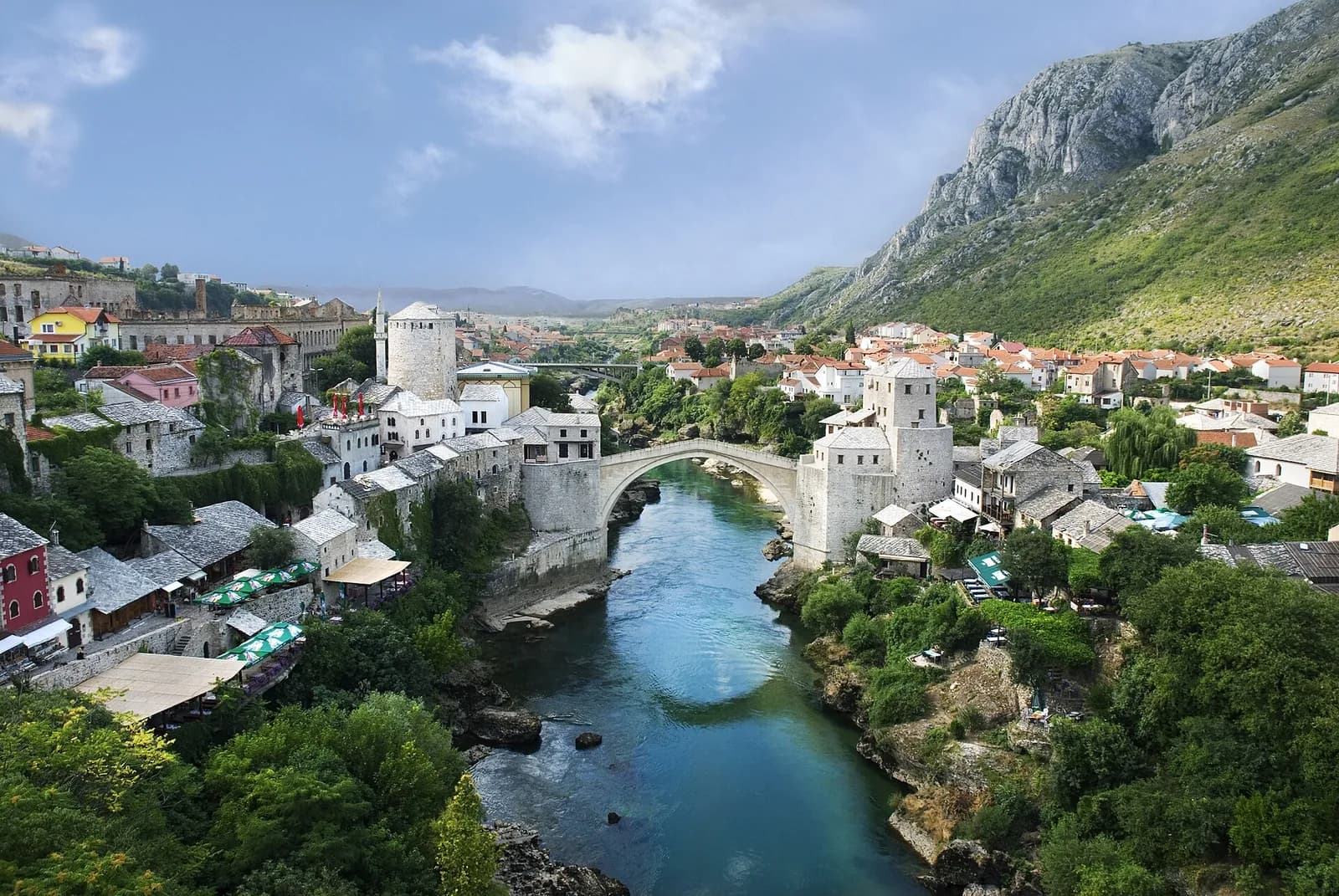
Photo credit
“Mostar Old Town Panorama 2007” — Ramirez · Wikimedia Commons · CC BY-SA 4.0 · Resized and converted to WebP for web delivery.Choose a Mostar stay when the old town is already central to your trip and your researched cellar options lie in Čitluk, Paoča or the wider Brotnjo wine area. The city is the base, not a promise of a walkable vineyard. Confirm a pre-booked transfer or a genuinely non-drinking designated driver before tasting. Choosing a city restaurant instead can keep an evening within the walkable part of your stay.
Trebinje for a separate wine-country stay
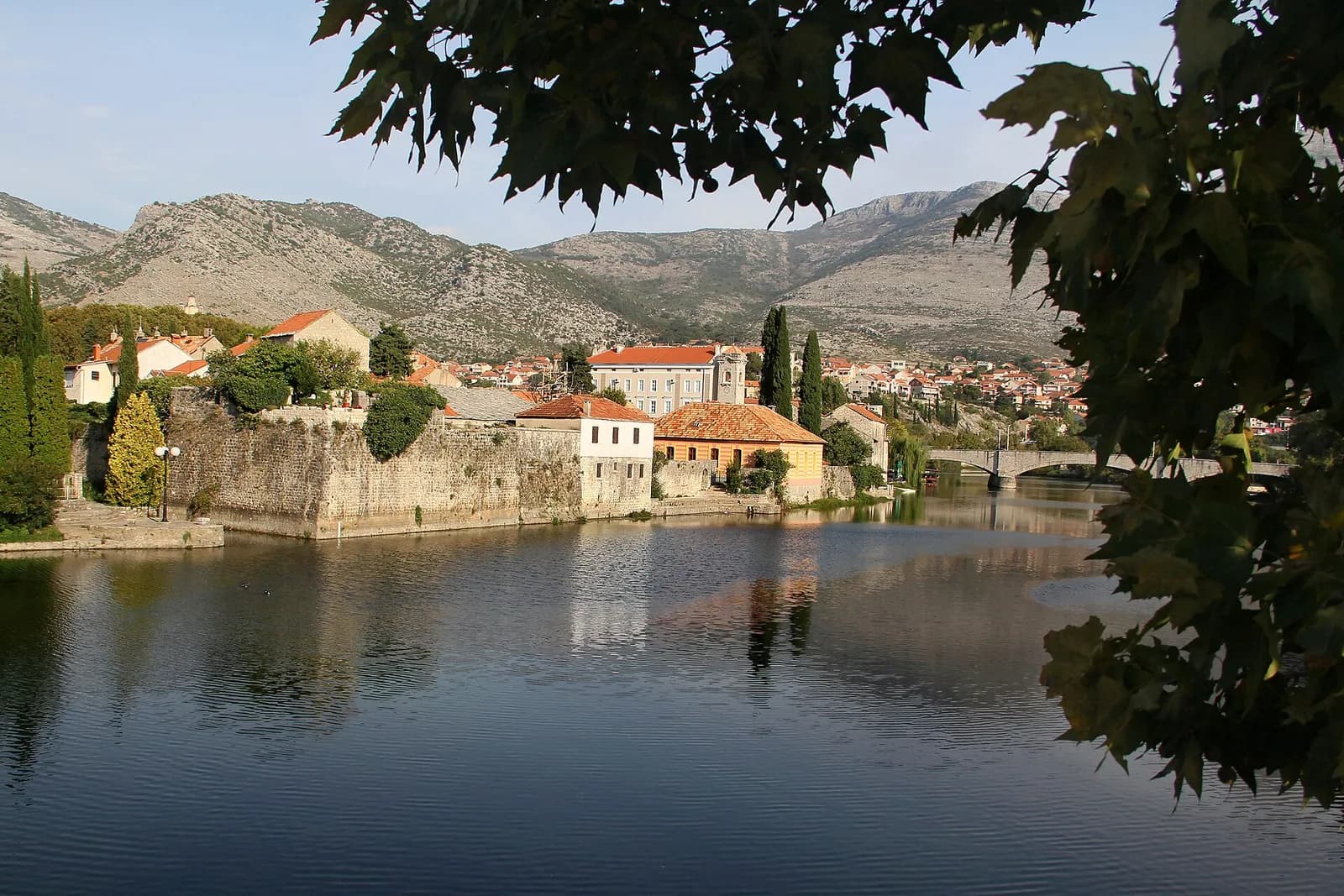
Photo credit
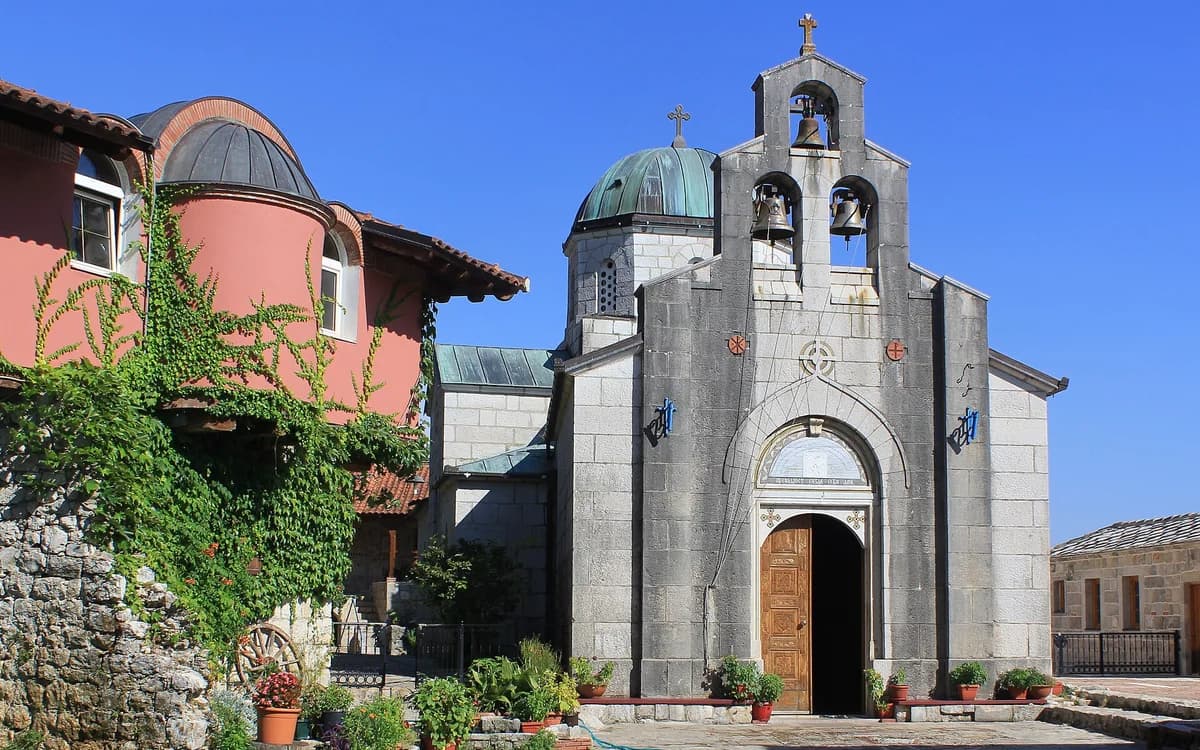
“Stari grad, Trebinje” — BrankaVV · Wikimedia Commons · CC BY-SA 4.0 · Resized and converted to WebP for web delivery.Trebinje fits a journey focused on its riverside old town, food market, monastery heritage and independently booked wine experiences. The HWR records Vukoje in Trebinje and Tvrdoš as a separate monastic wine-cellar location. Their published listings describe possible experiences, not a combined attraction ticket, free cellar access or a reliable shuttle. Plan the way back before drinking.
Arrange the cellar visit
The Herzegovina Wine Route is a tourism network, not a single winery or one entrance gate. Its official directory contains separately operated cellars, vineyards, restaurant settings and other food experiences. It specifically includes an advance-booking-required filter. A venue's descriptive page may include tasting rooms, vineyards or dining, but those published features are not reliable evidence of a space on the day you want. The website does not verify that a visitor can arrive unannounced, that English interpretation is available, or that a quoted experience still exists in the same form.
In the Čitluk area, the route describes the Čitluk Winery, the Stone Vineyards and a restaurant/cellar operation as separate elements in the wine-tourism landscape. Its pages also describe family producers around Paoča and Služanj. In Trebinje the official list includes Vukoje and the Tvrdoš Monastery Wine Cellar. Their listings mark advance booking requirements; they do not offer an authorized live booking through BosniaUnfolded. A winery tour, an ordinary restaurant meal, a monastery exterior visit and an interpreted tasting are four different arrangements. Confirm the exact name and address of the site, whether there is a seated tasting, what is included, and who will provide the return transport.
- Start with the HWR's wine-experiences directory and the operator's actual, currently maintained booking channel.
- Confirm the correct venue and entrance; multiple cellar or restaurant locations may share a brand.
- Ask whether food is a full meal, a small pairing or not part of the tasting.
Get to know the local varieties
The four grapes most prominently introduced on the HWR are Žilavka, Blatina, Trnjak and Vranac. The region's identity is not reducible to one universally described 'Bosnian red' or a ranking of producers. The official wine-route material identifies Žilavka with white-wine production and Blatina with a specific vineyard pollination need; the other two reds are also significant in Herzegovina. If your goal is learning rather than collecting bottles, ask the host to show how its varieties, vineyard sites and production styles differ. Two wines made from the same grape can be quite different, and any tasting notes should be attributed to a named wine, vintage and source rather than fabricated from a generic list.
Food is a valid primary reason for this region even for someone who never drinks alcohol. HWR descriptions refer to local cheese, cured meats, bread, olives and broader Herzegovinian dishes, but they are examples of regional gastronomy, not a guaranteed menu or a universal price-inclusive package. A small plate in a cellar is not a substitute for a meal if your group needs dinner. Travelers who avoid alcohol can choose a market, bakery, coffee service, local restaurant or cultural sightseeing, still asking about food allergens, dietary restrictions and the actual service available at that location. A region-wide wine route should never imply that every resident's hospitality is commercial or available without an invitation.
- Separate a general grape introduction from an individual producer's bottle, vintage and tasting claims.
- Ask what any food pairing actually includes and whether non-alcoholic drinks are offered.
- Plan a real meal independently if the listed experience is only a small tasting plate.
Plan the journey home
The most useful wine-country decision is often logistical. A picturesque cluster of winery pins does not mean those businesses are joined by a scheduled bus or that a driver can safely improvise after a tasting. The official HWR sample itineraries contain specific sequences and appear as inspiration, including car-based and pre-booking conditions; they are not proof of real-time transport, a guaranteed transfer or safe same-day driving durations. Two towns that look close at country-map scale may involve a more consequential road journey after dark. Choose one operating cellar that your transport can actually support rather than trying to collect every winery between Mostar and Trebinje.
The strongest low-risk models are a pre-arranged licensed guide/driver who remains sober, a genuinely verified local transfer with a booked return, or a stay from which a suitable restaurant can be reached without driving. A person who is drinking must not be the driver. Do not rely on a 'small tasting' as an exception, assume that a hotel can summon a vehicle in a rural village, or appoint an unfamiliar companion to take responsibility after plans have already changed. A completely alcohol-free food-and-landscape day is also a valid wine-country itinerary. For mobility needs, separately verify building steps, vineyard ground and the vehicle pickup point.
- Choose where everyone will sleep and how the last transfer works before booking a tasting.
- Use a confirmed professional driver or a sober designated driver; never drink and drive.
- Check pickup address, agreed return, evening service, cancellation and accessibility with the provider.
Plan your wine-country day
What would you need to confirm before a real outing?
Choose a base, an experience and an independent way back. This worksheet checks your own planning steps; it does not check live availability, make reservations, or approve a trip. Your choices stay only in this page's memory and are not submitted or saved.
Mostar / Čitluk: producer-led cellar visit
Your plan still needs independent confirmations before relying on it.
- Check the named operator's real address, visit-day opening or reservation, inclusions, age rules and accessibility.
- Select a realistic return method. A rural cellar or restaurant is not automatically walkable or served by a taxi.
- Independently confirm your return route, pickup or walk for your actual location and time.
If you change the destination, experience or travel method, relevant confirmations are cleared so you can check them again. No prices, travel times, tasting offers, wine availability, drivers or accessibility conditions have been checked live. If alcohol is consumed, do not drive. This worksheet helps you plan; it does not make reservations.
Where to base yourself
Choose the base that makes the next morning easier. Use the destination guide for the location trade-offs, then compare individual stays and confirm the actual journey to the attraction.
Questions that help you plan
Is the Herzegovina Wine Route a single winery?
No. It is a network of separately run wineries, food and tourism providers across several Herzegovina towns. Its listings are a starting point for independent checks, not an all-inclusive pass.
Can I do wine tasting from Mostar without a car?
Potentially with an explicitly confirmed transfer, guided tour or a suitable in-town food experience, but no particular transport departure, guide availability or tasting booking has been independently verified here. Do not drink and then drive.
Is it easier to taste wine from Trebinje?
Trebinje has its own listed cellar and restaurant experiences, including Vukoje and the separately located Tvrdoš site. A central hotel does not make every winery a safe or walkable trip; verify the actual venue and return.
Is Žilavka the same grape as Blatina?
No. HWR identifies Žilavka as a white-wine grape and Blatina as a red grape of Herzegovina, with its own unusual pollination requirements. Trnjak and Vranac are additional red varieties, not alternate names for Blatina.
Does visiting Tvrdoš Monastery include a wine tasting?
No automatic inclusion is established. The wine route lists a monastery wine-cellar experience with advance booking required. Respect the active Orthodox religious community and check separately whether any cellar visit, worship-space entry or photography is allowed.
Can families and non-drinkers enjoy the region?
Yes, through landscape, city history, local food, coffee and markets. Whether a particular cellar admits minors or offers non-alcoholic alternatives is operator-specific and must be checked before arriving.
Are tasting fees, drivers and winery hours confirmed?
No. No on-date price, reservation availability, driver service, language, opening time or accommodation package has been independently verified or booked for this article. Use current official providers before committing.
Sources and further reading
Operator and heritage references support the descriptions; our existing guides provide additional context. Opening, admission, transport and seasonal services can change. Check with the responsible operator for your travel date. Images carry separate credits.
- Herzegovina Wine Route — towns, history and grape overview Source reviewed 2026-10-15
- HWR — wine experiences and advance-booking filter Source reviewed 2026-10-15
- HWR — Čitluk/Brotnjo wine town and cellar descriptions Source reviewed 2026-10-15
- HWR — Trebinje food heritage and winery geography Source reviewed 2026-10-15
- HWR — Čitluk Winery visitor listing Source reviewed 2026-10-15
- HWR — Vukoje Winery visitor listing Source reviewed 2026-10-15
- HWR — Tvrdoš Monastery Wine Cellar listing Source reviewed 2026-10-15
- Herzegovina tourism-board wine route — Žilavka and Blatina background Source reviewed 2026-10-15
- HWR — example Wine & Food Safari (inspiration, not live departure) Source reviewed 2026-10-15